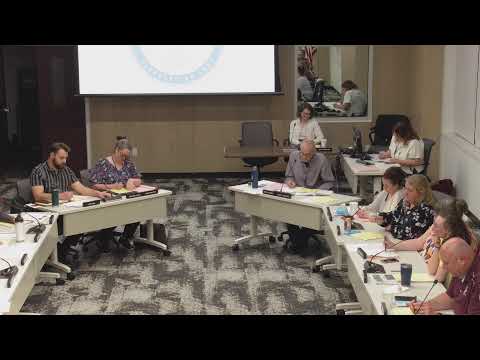
Board approves new authorized positions as stopgap amid dispute over juvenile redeploy program
Summary
After extended debate, the Champaign County Board adopted a resolution to add program director, therapist, case manager and family engagement specialist positions to the county’s authorized schedule. Supporters said the change preserves an option to house redeploy staff in the county executive’s office; opponents warned it risks further destabilizing the current contractor-run program.
The Champaign County Board voted to amend its schedule of authorized positions to create four slots — program director, therapist, case manager and family engagement specialist — giving the county a procedural option to employ staff who currently serve the juvenile redeploy program if stakeholders decide to relocate those functions.
The measure, offered as Resolution 2026-72, passed after a lengthy, sometimes heated debate about whether the county should intervene in a program currently run by Cunningham (as subgrantee) with fiscal-agent support from the Regional Planning Commission (RPC). RPC representative DeLizzo told the board RPC has shifted from a narrow fiscal-agent role toward providing stronger oversight and said the agency would work closely with Cunningham to meet state deliverables.
"Our proposal is to provide more oversight with Cunningham as the subgrantee," DeLizzo said when describing RPC’s plan to add clinical supervision and programmatic oversight.
Supporters of the change — including juvenile-justice stakeholders and frontline staff who told the board they face imminent staffing losses — said authorizing the positions preserves a path to keep experienced workers serving youth. The county’s juvenile program director and public defender emphasized the importance of continuity for court-involved youth.
"Building relationships, trusting relationships, is hard work and it's imperative," a public defender said, urging the board not to let key staff and the relationships they have formed evaporate.
James Benson, who works with the redeploy clients, told the board several core staff members said they would be willing to move if the county offered employment, and he said one therapist has indicated readiness to continue providing substance-abuse assessments and groups under a county arrangement.
Opponents warned creating county positions could inappropriately entangle the board in another organization’s personnel matters and urged patience to allow a corrective-action plan — already submitted by Cunningham and under state review — to play out. Several board members said they feared the executive office lacked the social-services staffing depth to operate the program without additional ramp-up time.
Board members ultimately framed the vote narrowly: passing the resolution simply makes positions available on the county’s books; it does not itself relocate personnel. As one member noted, if the positions are never filled they can be removed during the next budget review.
The resolution passed on a roll call following a motion to end debate and proceeded by the board; members opposing the measure pointed to unfinished stakeholder alignment and legal/process questions, while supporters said the county must avoid inaction if the program risks losing staff and thereby leaving children without services.
The action provides the county executive’s office and RPC with an option to pursue a collaborative plan for the grant year beginning in July, while stakeholders continue to negotiate program governance and corrective actions with the state.
AI generated
The text on this page is AI generated. Summaries, highlights, analysis, and video transcripts are all produced from the original source material.
AI can make mistakes, so if you spot one, and we will fix it for everyone.
Note: the source content is unaltered by us. Any content source we link to, be it a video, an audio recording, or a document, is presented exactly as its publisher released it. That publisher is usually a government body, sometimes an individual official or another organisation.