Get Full Government Meeting Transcripts, Videos, & Alerts Forever!
Get email alerts on the Open Enrollment topic
No spam. Unsubscribe anytime.
Oyster River board approves warrant asking voters to allocate zero dollars for open-enrollment tuition
Summary
The Oyster River Cooperative School District board voted to place a warrant asking voters to appropriate 'the sum of zero dollars' for tuition of students who attend open-enrollment schools, citing fiscal and oversight concerns after a recent court ruling and examples of out-of-state online academies.
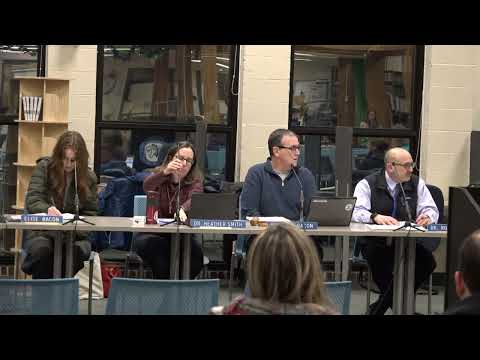
The Oyster River Cooperative School District school board voted Jan. 6 to place a warrant before district voters asking them to appropriate the sum of zero dollars for tuition costs of district students who attend open-enrollment schools or programs under RSA 194-D.
Superintendent Dr. Shaps framed the proposal as a way to preserve voters’ control over district appropriations after a recent court decision involving northern districts that, he said, has prompted statewide activity. “As the law currently stands, the sending district would be responsible for paying the receiving district up to 80% of the per pupil cost,” he said, describing the potential local fiscal exposure.
Board members spent the bulk of the meeting debating the legal and operational implications. The discussion touched on a northern online academy that has contracted with Stride K12, a national for-profit provider, and on reported problems in other jurisdictions that raise quality-control and oversight questions. The superintendent said oversight is difficult when instruction and some staffing are provided out of state and when a receiving district structures enrollment to generate revenue.
Members also raised special-education and transportation concerns: under some interpretations of the law, sending districts could retain IEP responsibility while paying tuition, and districts might be required to provide transportation for students who come from outside town boundaries, potentially increasing budgetary obligations after budgets are set.
Board members and staff discussed how best to educate voters about a complex, technical question on the ballot. The board agreed staff would post explanatory materials and links on the district website and include a “school board recommends” notation on warrant materials where permitted.
A motion to approve specific warrant language — asking voters to raise and appropriate the sum of zero dollars for the purpose of funding estimated tuition of district students who attend open-enrollment schools or programs in accordance with RSA 194-D — passed with six board members and the student representative in favor. The board scheduled further review at the Jan. 14 meeting and at the Feb. 3 deliberative session.
The action does not by itself change services or bar parents from enrolling children elsewhere; it asks voters whether district tax dollars should be used to fund tuition to receiving districts. Legal questions remain about how a voter-approved zero appropriation would interact with court rulings; board members said that unresolved issues may ultimately be decided in the courts.
Next procedural steps: public hearing on the bonded budget and a regular meeting Jan. 14, and the deliberative session Feb. 3, when the warrant will be presented to voters and discussed.