Get Full Government Meeting Transcripts, Videos, & Alerts Forever!
Get email alerts on the School Budget topic
No spam. Unsubscribe anytime.
Board of Finance Hears Seymour Board of Education’s 4.7% Budget Request as Health Insurance Drives Costs
Summary
The Seymour Board of Education outlined a proposed 4.7% increase to its operating budget, citing salaries and benefits (79% of spending) and a preliminary 13.5% health-insurance rise (about $772,000) as primary drivers; board members pressed for detailed totals on unfunded state mandates and asked about staffing reallocations, grants and shared services.
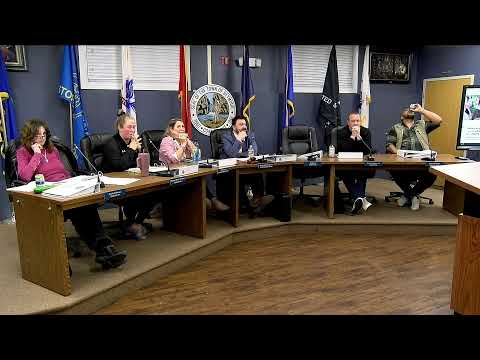
The Seymour Board of Education presented its proposed operating budget to the Board of Finance on March 9, asking for a 4.7% net increase driven primarily by personnel costs and rising health-insurance premiums.
Kristen Bruno, identified as chair of the Board of Education, told the finance board the district’s budget priorities emphasize long-term strategic goals, program continuity and operational efficiencies. "Seventy‑nine percent of our budget goes to salaries and benefits," Bruno said, describing a planning process that began with a roll-forward budget near 4.9% and produced savings that reduced the request to 4.7%.
The board said health insurance is the largest single pressure. Presenters reported the county health-insurance plan is projecting a 13.5% increase that the district estimated would add roughly $772,000 to the budget. "We went to the state plan last year to prevent big cost increases," Bruno said, "but across the state there are increases as part of the state plan." Board members were told the 13.5% figure was preliminary and final carrier numbers were still pending.
School leaders described several targeted staffing changes to meet accreditation and student needs without expanding net headcount. To meet a high‑school accreditation requirement the district plans to reallocate one retiring science-teacher position to create a media‑specialist role at the high school; the district also plans added speech and language supports for students with IEPs. "We didn’t just add that on top. We found some efficiencies," Bruno said.
Presenters pointed to recurring grant support for programs but warned most grant dollars are limited or competitive. The district identified Title I (roughly $300,000 in this presentation) as a major annual grant that funds several teachers and tutors, and mentioned the Carl D. Perkins vocational grant and smaller Title II and Title III awards. "A few grants are competitive," the superintendent said; recurring federal formula dollars provide a portion of program funding.
Board members pressed presenters for more specificity on unfunded state mandates and asked for a multi-year reconciliation showing costs versus ECS (Educational Cost Sharing) revenues. One member requested a five‑year list of unfunded mandates “so we can compare those numbers,” and presenters said such information and an ECS listing were available in the meeting packet and would be provided in greater detail at a later meeting.
On per‑pupil spending, Bruno noted Seymour's per‑pupil figure shown in slides is lower than several nearby and demographically similar districts; the slide material was provided in the packet for review. District totals presented in the meeting included more than 2,000 students, roughly 310 staff members, 184 teachers and 12 administrators. Presenters also highlighted recent academic recognitions and partnerships, including an allied‑health program with Griffin.
Members raised the question of where the board could cut if the town sought a lower increase. Presenters repeatedly emphasized that personnel comprises the vast majority of the budget and that discretionary areas are limited. Facilities repairs (heating systems, pool mechanicals) and unusually heavy snow removal also were cited as cost pressures that have eaten into flexibility.
Shared services with the town for facilities, technology and human resources were discussed as one cost‑saving strategy. Presenters said the salary and benefits for shared‑service staff do not appear in the school budget; they estimated the total package would be nearly $300,000 if the district had to directly fund those positions.
The board of finance confirmed follow‑up steps and public timelines: deliberations March 11 and March 18, a first‑selectperson presentation March 16, and a second public hearing March 19 at 6:30 p.m. No motions or votes on the budget were taken at the session.
Why it matters: The district’s request centers on unavoidable personnel and benefit costs, so the finance board and residents will have to weigh program priorities against limited discretionary options and a pending health‑insurance finalization.
Provenance: topicintro: SEG 179; topfinish: SEG 1481
Speakers quoted or referenced in this article: Kristen Bruno (Board of Education chair); Dr. Susan Compton (superintendent); Dr. David Alchna (director of curriculum); Shannon Levy (board secretary); board members identified by first name (Quinn, Andy, Mary, Betty, Alice, Richard Demco); additional speakers noted in transcript as Jason and Sabatur (names appear in discussion).