Get Full Government Meeting Transcripts, Videos, & Alerts Forever!
Get email alerts on the Fiscal Solveny topic
No spam. Unsubscribe anytime.
West Contra Costa Unified board adopts limited 2025–26 solvency plan amid intense public outcry
Summary
After hours of public comment, the West Contra Costa Unified School District board approved a one‑year fiscal‑solvency plan for 2025–26 and directed staff to pause other proposals while pursuing revenue and stakeholder engagement. Speakers urged delay and warned cuts to special education, community outreach workers and K–8 programs would harm students.
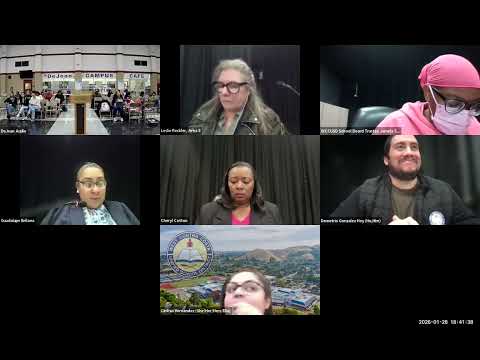
The West Contra Costa Unified School District Board on Jan. 28 approved a limited fiscal‑solvency plan for the 2025–26 school year and asked staff to return with expanded revenue options and broader community engagement before taking further program or staffing actions.
In a late‑evening vote, the board approved a motion to accept the district’s short‑term plan — which relies on one‑time reserves and immediate spending freezes — while tabling wider proposals and directing administrators to meet with labor groups, affected schools and community stakeholders before the board’s next meeting. The motion passed after robust debate and extensive public comment.
District finance staff had presented a three‑year gap driven by declining enrollment, recent losses in average daily attendance, rising special‑education costs and higher contractor spending. Acting Associate Superintendent for Business Jeff Carter told the board the district faced a multi‑year structural deficit and displayed a menu of actions: drawing down designated reserves, shifting eligible costs to restricted grant dollars where allowed, cutting discretionary contracts, reducing site materials budgets, and aligning staffing to lower enrollment.
"Fund 17 reserves will be exhausted in the next fiscal year without action," Carter said in the staff presentation. The slides shared with the board estimated a multi‑year deficit in the low‑hundreds of millions before proposed savings, with near‑term reliance on reserves and targeted staffing reductions to stabilize the budget.
Board members and dozens of public commenters pressed staff for alternatives and additional detail. Teachers, parents and union leaders repeatedly urged the board to delay final decisions and consult labor partners and affected communities before approving school consolidations or program eliminations.
"If you're all as smart as you think you are, this should scare the be Jesus out of you," said public commenter Don Gausny, citing safety and facility concerns while urging comprehensive review of campus conditions. Multiple speakers warned that proposed reductions to special‑education staffing (public comment referenced a $3 million proposed reduction) and cuts to school community outreach workers would disproportionately harm vulnerable students.
Union leaders and school staff described short notice and a need for more participatory planning. "We're not working with a financial situation that is something new," Mark Mitchell of United Teachers of Richmond said in public comment, urging collaborative approaches rather than top‑down directives.
Board members acknowledged the fiscal pressures but differed over timing. The motion approved on Jan. 28 accepted the district’s immediate, one‑year plan while directing staff to: return Feb. 11 with additional revenue strategies, meet with labor and community groups (including schools named in the equity impact work) and preserve time for fuller engagement before implementing longer‑term staffing or program changes.
Superintendent Cotton told the board that while staff would continue to refine program redesigns, some timeline steps (including legally required personnel notifications tied to reductions in force) meant the district needed an approved short‑term plan to meet state reporting requirements. "Those numbers are not going to drastically change," the superintendent said; staff said the larger program redesign work would continue through the spring with more community input.
The board’s action last week — and the staff presentation — also proposed reviewing K–8 models and consolidating some middle‑school sites in order to align staffing with falling enrollment. The proposal prompted particular concern from families and staff at Betty Reid Siskin (Saskin) Middle School and other K–8 campuses, who said a merger with another middle school would disrupt students and reduce neighborhood access to electives and supports.
Board members and staff agreed to a sequence of next steps: a targeted stakeholder outreach schedule, meetings with bargaining units to review potential staffing impacts, and a return of revised budget materials in two weeks. The board adjourned the session at 11:31 p.m.
What happens next: staff will pursue the outreach and revenue options the board requested and return with additional detail at the Feb. 11 meeting; legally required timelines for personnel actions mean some decisions may become urgent if no alternative revenues materialize.
Votes and motions: The board voted to accept the one‑year fiscal plan and to table further proposals pending additional engagement; staff were directed to present revenue enhancement strategies and to meet with unions and affected school communities before the board’s next meeting.