Get Full Government Meeting Transcripts, Videos, & Alerts Forever!
Get email alerts on the Reading topic
No spam. Unsubscribe anytime.
Lafayette Elementary credits building‑knowledge approach and coaching for reading gains
Summary
Lafayette Elementary reported exceeding its i‑Ready Stretch Growth target (37% met vs. 24% target). Staff credited the shift to building knowledge with Amplify Science, targeted decoding work, coaching cycles, and data meetings that created biweekly progress monitoring and tiered supports.
Lafayette Elementary presented site practices that the school says helped accelerate reading growth for students who were behind.
District staff noted Lafayette exceeded its i‑Ready Stretch Growth target: the school’s target was 24% of identified students meeting Stretch Growth from the D1 to D2 diagnostic, and Lafayette reached 37%. District staff said that of 104 fourth‑ and fifth‑grade students the district was watching, 39 met their Stretch Growth target.
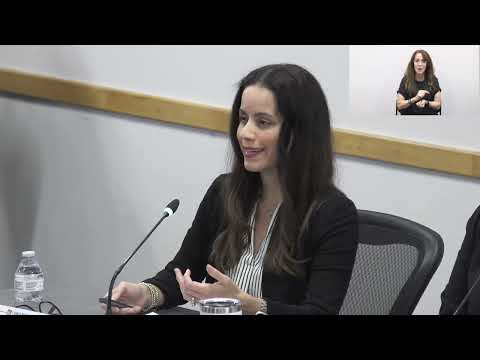
Lafayette leaders said they intentionally centered a building‑knowledge approach in upper grades, using the Amplify Science curriculum as a content backbone while teaching decoding, morphology and vocabulary within that content. Shayla Brown, the school’s Instruction and Intervention Coordinator, said teachers received Getting Reading Right training and continued site coaching and modeling to build skills teachers had not previously taught routinely in upper grades.
The school described a mix of tier‑one improvements (coaching, common interim assessment protocols, shared success criteria), tier‑two groupings and expanded‑learning tutoring, and coaching cycles with biweekly progress monitoring that focused on students who were nearly meeting benchmarks. Teachers said they use classroom small groups, APEX sessions to recover credits, and frequent data chats where each child’s scores are tracked on a visual board.
Lafayette leaders also noted the school’s dual‑language (50/50) model requires attention to language of instruction when deploying assessments and supports; staff said dual‑language classes sometimes need additional site‑level planning to bridge Spanish and English instruction.
The board praised the site’s combination of quantitative (i‑Ready/stretch targets) and qualitative (coaching, student goal‑setting, SEL/Harmony) approaches and thanked the Lafayette team for sharing practical strategies. Staff said they will continue spreading promising practices through principal visits, ILT exchanges and principal supervisor meetings.