Get Full Government Meeting Transcripts, Videos, & Alerts Forever!
Get email alerts on the Education Curriculum topic
No spam. Unsubscribe anytime.
Digital learning specialist summarizes sabbatical work; district launches K–4 maple-sugaring curriculum
Summary
Sarah Curtain, Oyster River’s digital learning specialist, presented findings from a recent sabbatical and introduced a scaffolded K–4 maple-sugaring curriculum funded in part by a New Hampshire Agriculture in the Classroom grant. Teachers and researchers are partnering to scale integrated, inquiry-based projects across grades.
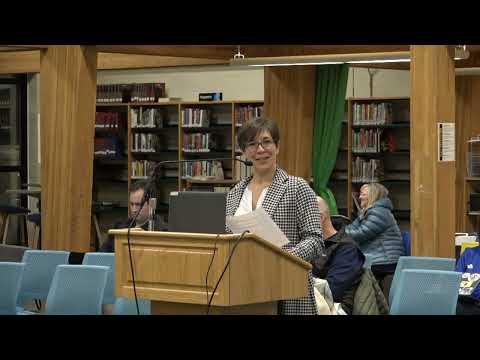
Sarah Curtain, the district’s digital learning specialist, told the Oyster River Cooperative School District board on Dec. 3 that her sabbatical focused on “how can we use integrated learning to reduce siloing and create a more cohesive meaningful learning experience for students.” She said the project produced teacher resources, an annotated bibliography, and a phased guide to help teachers begin integrated curriculum work.
Curtain said she assembled a PLC of elementary teachers, visited model programs and national conferences, and used a New Hampshire Agriculture in the Classroom maple-sugaring grant as a practical anchor for a K–4 integrated unit. The grant purchased a reverse-osmosis machine to streamline the syrup-boiling process and provided materials to support hands-on lessons in science, math, language arts and the arts.
Chris Hall, the district’s library media specialist, described a second-grade “Wonder” inquiry that paired nature journaling with research and community experts. “Students brainstormed questions after nature sessions and conducted research with community experts,” Hall said, adding that pupils created an interactive mural that prompts hallway visitors with questions such as “Do flying squirrels really fly?” (Hall noted the class discovered they glide, not fly.)
Jessica Whan, a physical education and health teacher, described how the maple-sugaring work had been incorporated into PE and class activities: “We go out, we tap trees with the help of our wonderful volunteers… the boiling will be done during classroom time.” Whan said the district previously relied on ad hoc PE-based activities and that the new scaffolded curriculum will bring more consistent, year-to-year progression.
Curtain also described collaboration with Dr. Susan Drake and Dr. Joanne Reid (Brock University), who will study the district’s implementation and check in periodically to help refine the curriculum. Curtain said staff plan to present results at the New Hampshire Maple Symposium and that teacher teams will continue sharing examples of student work in the spring.
The presentation emphasized inquiry-based learning, teacher collaboration time and community partnerships as central to the approach. Board members praised the student engagement shown in the projects and asked to see student work at a future meeting.
The district plans to pilot the K–4 maple-sugaring sequence this school year and follow up with research partners and a spring showcase of student projects.