Get Full Government Meeting Transcripts, Videos, & Alerts Forever!
Get email alerts on the Education Capstone topic
No spam. Unsubscribe anytime.
Oyster River High School faculty outline capstone program and pilot plans
Summary
High‑school faculty presented a portfolio‑based capstone tied to the district’s Vision of a Graduate competencies, describing grade‑level milestones, mentor requirements and public exhibitions; the board pressed for clarity on evaluation, mentor capacity and check‑in timelines.
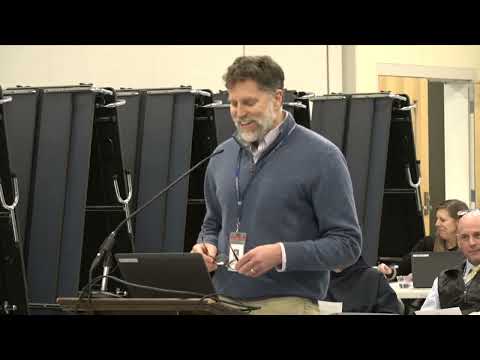
Oyster River High School faculty on Feb. 4 detailed a draft capstone program that would require students to develop an essential question, find a mentor, conduct research and present a culminating product to the school community.
Presenters said the program is being phased in as a portfolio across ninth through eleventh grades so students arrive at a senior capstone with documented interests and experience. Students who complete the capstone could earn a half credit; pilot students (a freshman and a sophomore) are already testing forms and research worksheets.
Faculty described multiple pathways for capstones: extensions of CTE experiences, academic independent studies, ELO (experiential learning opportunities), or personal projects. Examples shared included a student designing residential wiring as a CTE capstone, a senior extended anatomy project for a nursing pathway, and an interior‑design ELO resulting in a client plan.
Board members focused questions on evaluation and implementation. One member asked who would determine whether a student met the competencies; presenters said an initial “vision of a graduate” committee will review early portfolios and suggested a future model could include a panel with the mentor, an adviser and an outside expert. The presenters noted the process will be iterative as the pilot progresses and that annual review would refine criteria and procedures.
Several board members raised concerns about mentor capacity and the workload for staff. Presenters said mentors can be school staff or community experts and that the district will help students identify outside mentors; advisory teachers will guide students through proposal and check‑in deadlines. Presenters also emphasized built‑in checkpoints so students are not attempting a capstone for the first time in their senior year.
The program’s proponents said the goal is to make capstones part of school culture — with a possible schoolwide showcase or poster session where seniors present to students, families and community members — and to build community mentor capacity over time. The board offered support for continued piloting and asked faculty to return with details on assessment rubrics, mentor expectations and the planned timeline for scaling the program.
The presentation closed with board members encouraging continued faculty work on assessment standards and logistics; faculty agreed to bring more specific implementation documents to future meetings.