Get Full Government Meeting Transcripts, Videos, & Alerts Forever!
Get email alerts on the Education Schedule topic
No spam. Unsubscribe anytime.
Oyster River Middle School principal outlines major schedule overhaul; board and community urge caution
Summary
Principal Bill Sullivan proposed a new middle-school schedule with longer core blocks, revised teaming and shared-teacher roles to address fluctuating enrollment. The plan drew detailed questioning from board members and sustained public concern about pace, teacher input and professional-development needs.
Oyster River Middle School Principal Bill Sullivan reported to the school board on a proposed multi-year schedule and staffing reorganization intended to respond to declining and fluctuating enrollment and to protect core instructional time.
Sullivan said the model aims to create predictable staffing for multiple years, retain team-based relationships, and increase daily time for English language arts and math. Key features include three extended daily core periods (roughly 70–78 minutes for some grades), moving world-language instruction away from the school’s 30–45 minute "Bobcat" support block, reducing Bobcat from 45 to 30 minutes, and changing team configurations across fifth through eighth grades so certified staff can be aligned to enrollment projections without repeated annual reassignments.
The principal framed the changes as pragmatic responses to cohort shifts — for example, a large incoming fifth-grade cohort — and noted certification constraints (teachers' endorsed grade bands and subject areas) and shared staffing arrangements with the high school for low-enrollment offerings (Mandarin, Spanish). Sullivan said a scheduling consultant aided the office by modeling scenarios and said he had briefed and met with staff individually during the design process.
Board members and public commenters voiced several recurring concerns. Trustees asked whether staff had been part of a representative committee design process (Sullivan said he had met with every staff member and used a consultant for scenario modeling, but said there was not a large standing scheduling committee). Members asked for more teacher-facing visuals showing how a teacher’s daily schedule would look, clearer plans for professional development to teach 70+ minute blocks, and details on how interventions and special-education services would be scheduled without stigmatizing students who leave for pull-out services.
Several board members urged a slower, phased approach rather than full implementation next fall. They also asked the administration to re-run the plan using the district’s likely staffing counts (27–28 core FTEs) and return with costed options and PD timelines. Administrators and board members noted trade-offs: the proposed schedule can increase core instructional time but requires additional collaboration, PD and careful handling of field trips, mixed-grade team logistics, and world-language scheduling.
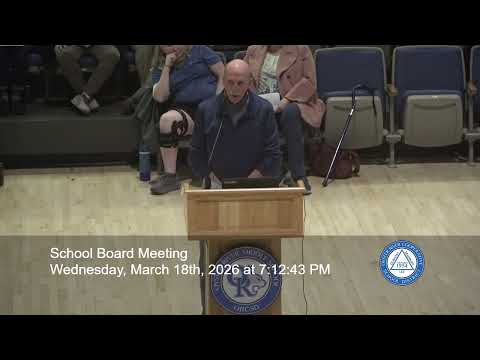
Public commenters — including current and former teachers, parents and a long-serving former middle-school teacher — warned that long blocks can be hard to implement without sustained PD and that sudden reassignments across grades could disrupt established practice and student learning. Some parents asked the board to pause, form a teacher-led committee, and delay any major change until staff have had the chance to shape the final plan.
The board did not vote to adopt the schedule. Trustees instructed the principal and administration to refine visuals, return scenarios showing how alternative FTE counts affect class sizes, itemize PD needs and costs, and consult further with teachers before any final schedule change is adopted.