Get Full Government Meeting Transcripts, Videos, & Alerts Forever!
Get email alerts on the Irrigation And Infrastructure topic
No spam. Unsubscribe anytime.
MRGCD: siphon drilling to resume after stuck auger; pumps and irrigation remain at risk if runoff stays low
Summary
MRGCD CEO Jason Kassuga said a conductor casing/auger issue paused work at the Corrales siphon; drilling is expected to resume in late March or April, but low basin levels and limited spring runoff could limit irrigation and pump operation this season.
Jason Kassuga, CEO and chief engineer of the Middle Rio Grande Conservancy District (MRGCD), briefed the Corrales Village Council on March 2 about progress and setbacks at the Corrales siphon site. Kassuga said the project has continued on the Sandia side while work at the Corrales side paused after an auger became stuck inside a conductor casing, requiring demobilization and a change in drilling approach.
"We did have issues with the conductor casing along with an augur that the contractor had in there. That caused us to pause and demob," Kassuga said. He said the contractor will reinstall a different conductor casing and resume drilling; some salvage work may occur later when river conditions are safer.
Kassuga said residents should start to see more contractor activity in March. He expects conductor casing work to return in late March and resumed drilling on the west side heading east in April. He emphasized that the contractor and the district technical team are confident in the plan to move forward.
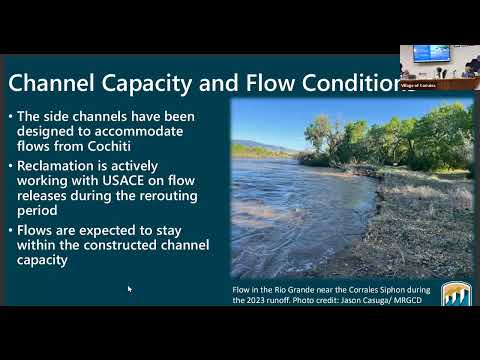
On irrigation operations, Kassuga warned that basin storage is low (district maps show roughly 50% or less in basins) and that spring runoff may be only a "blip." He said pumps currently staged at Corrales are expensive to mobilize and the district has been paying standby charges to keep them available. Whether pumps can operate through the season depends on the magnitude and timing of runoff and the monsoon outlook. "At some point in time there will be a conversation for balancing the money that's being moved and efficiency of projects," Kassuga said.
Kassuga also noted the district used a small quantity of San Juan‑Chama water last year to strategically benefit Corrales — a targeted use to keep the local river level high enough for pumps to operate — and that such strategic early releases may be a topic if shortages persist.
Councilors pressed Kassuga about salvage of the stuck machinery and about the December 2026 funding deadline for the siphon design and construction; Kassuga said the contract approach and timeline are intended to meet the funding expiration, and that if unanticipated drilling complications force a major delay the project could face significant consequences.
What happens next: MRGCD will proceed with the revised drilling plan, expect increased activity in March, and continue to coordinate water releases and monitoring with Corrales officials; Kassuga said staff will return to update the council if project risk or timing materially change.