Get Full Government Meeting Transcripts, Videos, & Alerts Forever!
Get email alerts on the Municipal Compensation topic
No spam. Unsubscribe anytime.
New Britain committee hears pay requests as registrars cite surge in early-voting duties
Summary
At a March 10, 2026 special meeting, New Britain’s compensation committee heard requests from the clerk of committees and the registrars of voters for pay increases, citing added early-voting days, new tabulation systems and other state-mandated duties; the committee gathered information but took no pay vote.
New Britain’s compensation committee met March 10, 2026, to gather information on proposed pay changes for the clerk of committees and the registrars of voters after presenters described expanded duties tied to recent state election-law changes. The committee did not vote on any pay adjustments and treated the session as an intake for a study that will move through the administration, finance and law committee.
Alman Santiago, speaking on behalf of the clerk of committees, said the council office has been operating without an administrator for months and proposed converting the clerk position to daytime, part-time coverage to ease workload. Santiago asked for "an $18,000 bump from the $12,000 that it is," saying that would equate to roughly $30,000 total and would add daytime coverage "to help alleviate some of the workload from the administrator." He told the committee the likely schedule would be about three days a week and that precise hours and funding will be set through the budget and civil service procedures.
"We are working on making that position a part-time during the daytime and night," Santiago said, adding that the council plans to submit specifics during the budget process. Committee members asked for details about hours and logistics; Santiago replied a formal proposal would follow once budget numbers are available.
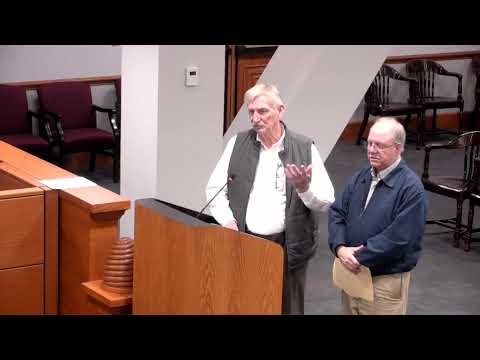
Peter Gston and Lucian Pavllock, the registrars of voters, told the committee their office’s responsibilities have grown markedly in recent years because of expanded early voting, special elections and new technology and compliance duties. Pavllock said the city has seen varying totals of early-voting days—"28 days two years ago, 21 last year, 25 this year"—and that each early-voting period requires hiring and training substantial temporary staff for multiple locations.
Pavllock described technical work the office now performs that it did not two election cycles ago: programming ballots for new high-speed tabulators, running and testing tabulator and poll-pad systems, working with a new centralized statewide registration system called "total vote," and complying with a recent requirement to include Spanish translations on signage. "We’re not being compensated for all that increase of stuff," Pavllock said, describing regular daytime responsibilities plus weeks of additional hours during pre‑election training and post‑early-voting processing.
Both registrars said the office routinely brings in dozens of temporary workers: they estimated hiring roughly 180–200 poll workers for a single election day and needing roughly 14–16 people per day at each early‑voting site. One registrar said a "legitimate bump in our salary would be about $10,000 a year," attributing the request to expanded duties and unpaid overtime that hourly staff receive but elected registrars do not.
Committee members pressed for quantification of extra hours; the registrars said their regular schedule is about 36¼ hours per week and estimated 15–20 weeks per year when they work significantly more than that because of elections, training and system testing. They also raised that some long‑tenured hourly employees now earn more than the elected registrars because of overtime pay.
On polling‑place policy, the registrars said New Britain currently has 17 polling locations (not counting early‑voting sites), and argued the city has more locations per square mile than comparable municipalities. They said reducing election‑day polling locations could reduce recruitment burdens and costs, and that municipalities control the number of voting districts and polling locations without state approval; registrars said they would consult with the mayor before pursuing changes.
Committee staff clarified the compensation committee’s role is to gather information and make recommendations; no formal compensation decisions were made and the committee will forward findings for further review. A motion to adjourn by Alderwoman Barbosa was seconded and carried; the meeting ended at 7:10 p.m.
What’s next: The committee’s review is intake for a study of the clerk of committees and the registrar positions; specific salary proposals and budget requests will be submitted through the regular budget process and civil-service steps before any change is adopted.