Get Full Government Meeting Transcripts, Videos, & Alerts Forever!
Get email alerts on the Diversity Equity Inclusion topic
No spam. Unsubscribe anytime.
Resident testimony divides school board on reviving diversity, equity and inclusion coordinator role
Summary
Two public commenters offered opposite views: Dr. Lind Lowski urged reinstating a district diversity, equity, inclusion and belonging coordinator to provide training and consistent responses to bias incidents; Bruce Fenton opposed such positions as divisive and argued the district must protect student club access under the Equal Access Act.
During the public-comment portion of the Nov. 19 meeting, two residents presented sharply different perspectives on whether the district should hire a diversity, equity, inclusion and belonging coordinator.
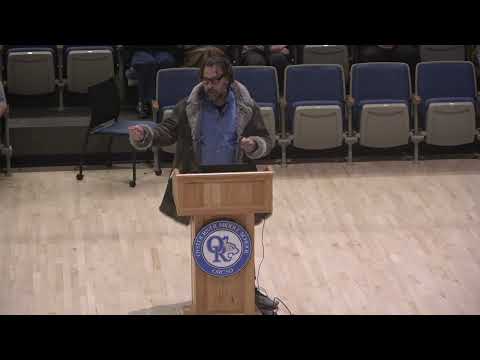
Dr. Lind Lowski of Durham identified herself as a college educator and a parent whose children have attended Oyster River schools. She described repeated racist, xenophobic, sexist and homophobic incidents over the past 16 years affecting students and teams, and said teachers and coaches often want to act but lack coordinated training, resources and consistent response protocols. "An effective diversity, equity, inclusion, and belonging coordinator should provide exactly the kind of structure and expertise our district currently lacks," she said, listing duties that would include teacher training, consistent responses to bias incidents, curriculum review and creating safer classrooms where "every student feel[s] safe, seen, and valued."
A subsequent commenter, Bruce Fenton, said he respectfully disagreed and argued such positions can be “very very divisive” and may increase the problems they are meant to solve. Fenton said he has been contacted by an executive at Turning Point USA and described a student’s attempt to form a chapter; he cited the federal Equal Access Act and past court decisions to argue that schools cannot deny a student club on political grounds. Fenton further said that comments by a board member at a prior meeting—he paraphrased a comparison between the club and the Ku Klux Klan—may constitute impermissible "chilling" of student speech and urged the board to make clear that clubs and viewpoints are welcome.
Neither speaker presented a formal motion; the board did not take action on staffing during the meeting. The public-comment exchange highlighted contrasting community views the board may weigh as it considers personnel and curricular approaches to equity, student-speech protections and adviser availability for student groups.