Get Full Government Meeting Transcripts, Videos, & Alerts Forever!
Get email alerts on the Student Research topic
No spam. Unsubscribe anytime.
High school Biobuilders club presents novel gene-research project and conference awards
Summary
Students from Oyster River High School’s Biobuilders club presented original biotechnology research using planaria models, described imaging and mentorship partnerships with UNH and MIT-area labs, and said they plan to publish and continue the program next year.
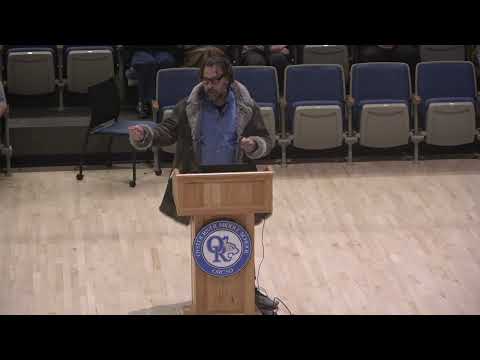
Oyster River High School students told the school board on Nov. 19 that their Biobuilders club has produced novel laboratory research and presented it at university-level conferences.
Dr. Thompson introduced the team and said the club is part of the Biobuilder network. Students Juliana, Anya Shoua, Lauren Pang and Felix Scarlet described a year-long project in collaboration with researchers at UNH Manchester that used planaria (flatworms) to study a gene the students said is implicated in roughly 15% of cases of a lethal genetic disease. The students said they used RNA interference to “knock down” the gene in planaria and tracked changes to cilia-driven movement as an observable phenotype.
“Most high schoolers don’t get these opportunities,” Juliana said, describing hands-on laboratory techniques and imaging with confocal and scanning-electron microscopes. The students said collaboration with university mentors allowed them to obtain high-resolution images and video of cilia, and that some of their results were presented at the Ragon Institute assembly (a Biobuilder final assembly) and the NHMRY conference. They also said they received support through NHCreates and that students may earn college credit through Great Bay Community College.
Board members asked about time commitment and logistics. The students said the club met weekly but that lab work required extra sessions—“multiple times a week” and additional visits to university instrumentation centers during intensive experiment phases. When asked how they suppressed gene expression, a student explained the approach in plain terms: feeding double-stranded RNA to planaria to trigger RNA interference so target RNA is degraded.
Board members praised the students’ communication skills and invited them to return with spring results. Dr. Thompson and the students said they intend to continue the Biobuilders program for 2025–26, gather more data at university facilities and pursue peer-review publication.
The presentation illustrated a district-supported pathway for students to access mentors, research infrastructure and external conferences; students emphasized both technical skills and gains in scientific communication.