Get Full Government Meeting Transcripts, Videos, & Alerts Forever!
Get email alerts on the Affordable Housing topic
No spam. Unsubscribe anytime.
Residents press council over St. Andrews affordable‑housing overlay, citing setbacks, drainage and traffic
Summary
At a public hearing on zoning changes to enable affordable housing, residents across South Street and Ethan Drive urged the borough to preserve St. Andrews’ front lawn, resolve drainage risks for adjacent homes and clarify setback measurements; council said state timelines and mediation constrain local options and directed further review by the planning board.
The Borough of New Providence heard more than two hours of public comment on a zoning amendment tied to a mediated affordable‑housing plan that would allow development at the St. Andrews Church site.
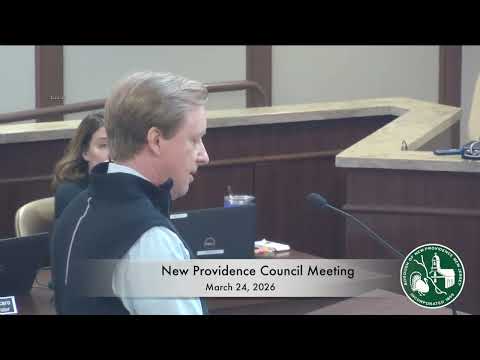
Eric Waters, who lives at 394 South Street, asked why the ordinance sets a 25‑foot setback on South Street when the pastor has publicly said the church’s ‘‘great lawn’’ will be untouched. ‘‘I don’t see how those two things can both exist,’’ Waters said, and urged the council to require a site plan be shown to neighbors before any ordinance is finalized. Council and staff responded that setback language in the ordinance does not necessarily mean construction will occur to that line, but also noted that putting a setback into law can limit future options unless amended.
Several residents raised safety and infrastructure concerns. Rosemary Zeder (410 South Street) told the council she fears traffic and safety problems from multiple nearby projects, questioned the expected quality of low‑income units and noted that she believes 500 units are proposed in the broader Nokia area and 24 units across from South Street. Fran Jakowitz, whose parents live at 20 Ethan Drive behind the St. Andrews parking lot, presented video and photos of flooding from a July storm and said runoff funnels into her parents’ yard; she asked the borough to require plans that address drainage. Lori Lake (5 Ethan Drive) pressed for clarity on whether a 40‑foot setback is measured from the asphalt curb or from property lines and how close new buildings could come to existing rear yards. The council advised that full engineering plans have not been submitted and that the planning board and construction officials will review drainage, parking and setback details when plans are filed.
Father Daniel G of St. Andrew’s Church told the meeting the parish had been ‘‘adamant that they did not want to do anything to affect the great lawn’’ and said the church hopes to finalize its site plan soon; he offered to meet with neighbors after Holy Week and, subject to counsel, make materials available for review.
Council members and staff repeatedly described the legal and procedural constraints shaping the timetable. Paul (borough attorney/staff, as identified in the transcript) said the legislature and a special‑adjudicator process created tight deadlines and mediation requirements; Mayor Morgan and other council members urged residents to attend planning‑board hearings, submit materials to the borough (Bernardet’s office was named as a contact) and contact state legislators about policy questions.
The meeting made clear several technical points that will affect later review: the ordinance language referenced a 25‑foot minimum setback on South Street and a 40‑foot setback tied to Ethan Drive; St. Andrews is proposing 24 affordable units within a larger development scheme; planning‑board review, engineering plans and RSIS standards will govern drainage, parking and final configuration; and the borough must notify properties within 200 feet when formal plans are filed. Father Daniel reiterated the parish intends to preserve memorial space at the front lawn.
What happens next: the council closed the public hearing on Ordinance 2026‑01 and directed staff to collect submitted materials for planning‑board review. The council also moved and adopted Ordinance 2026‑02 (replacing Chapter 275 of the borough housing code) by roll call during the meeting. When development plans are filed, the planning board will hold detailed technical hearings; residents will receive notice and may question engineers and architects at that time.
The exchange highlighted a recurring tension in New Jersey municipalities: local officials saying they are constrained by state Mount Laurel and fair‑share requirements, while neighbors press for more local control over site selection, design, traffic mitigation and stormwater management. Council members repeatedly said they are attempting to minimize neighborhood disruption where possible and that procedural steps at the planning board will be the forum to test technical mitigations.