Get Full Government Meeting Transcripts, Videos, & Alerts Forever!
Get email alerts on the School Referendum topic
No spam. Unsubscribe anytime.
Berkeley Heights board keeps two-question March 10 referendum after lengthy presentation and debate
Summary
After a detailed presentation on proposed districtwide repairs and learning-space upgrades, the Berkeley Heights Board of Education voted to place the district's original two-question March 10, 2026 referendum on the ballot. The first question would be tax-neutral using state debt-service aid; the second would add upgrades that average about $250 a year for the typical home if approved.
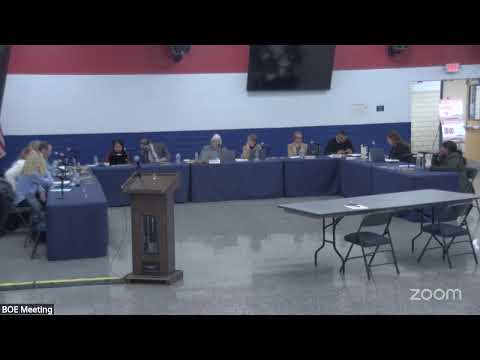
The Berkeley Heights Board of Education voted on Nov. 18 to place a two-question referendum on the March 10, 2026 ballot, preserving the original pairing of projects after rejecting a board amendment that would have moved more roofing and mechanical work into the tax-neutral question. The vote followed a three-hour public presentation and more than two hours of questions from board members and residents.
Consultant Frank Msinio told the board the district is proposing a two-part referendum. "The district is proposing to conduct a referendum with a two-part question," he said, describing a first question of roughly $21.2 million that would fund media-center renovations at all schools, site and parking improvements, security and technology expansions and a partial roof replacement at Woodruff Elementary. Msinio said the state has approved roughly $7.1 million in debt-service aid that would reduce the net local cost of Question 1 and keep it tax-neutral under the district's financing assumption.
A second, contingent Question 2 would add additional educational and capital projects including multiple roof replacements, mechanical and plumbing upgrades, science and STEM lab renovations and an enlarged backup generator at the high school. Msinio said Question 2 would cost about $29.1 million before state aid; with an estimated $9.8 million in state aid, the local share would produce a typical tax impact the district estimated at about $250.37 per year on the average assessed home.
Bond counsel Tony Salman explained why ballot language lists a higher percentage of potential state aid than the district expects to receive. "The law requires you to put 40%," Salman said, referring to the guidance that appears on approval letters from the School Development Authority. He said the state's actual allocations have averaged closer to 34% in recent years and the presentation sought to be transparent about that difference.
Public comment at the meeting was lengthy and often pointed. Students and parents described how heating failures, leaking roofs and aging science labs affected instruction. "If we pass proposal number one and number two, we'll see the most impact," said Howard, a Governor Livingston student representative who urged board members to prioritize projects that would directly improve hands-on science and learning spaces. Student speaker Pippa said she has taken multiple AP science courses and often found equipment or lab access lacking; she and other students urged stronger emphasis on science labs and media centers.
Board members debated whether to rearrange projects between questions to favor more urgent building systems in the tax-neutral question. One proposed amendment would have moved additional roofing and mechanical projects into Question 1 and shifted many educational media-center projects into Question 2. Proponents said shifting would increase the chance that more urgent infrastructure passes without adding local tax cost; opponents warned the change could leave some schools without security and technology upgrades if Question 2 later failed.
After discussion, the amendment to reorder projects failed on a roll-call vote. The board then approved the original two-question package as presented by administration and consultants. Minutes of the vote were recorded in the public meeting record.
What the questions mean for voters
- Question 1 (proposed $21.2 million): Media-center renovations at every school; TV studio renovation at the high school; districtwide parking, drainage and walkway repairs; security and PA/clock/speaker upgrades at each school; and a partial roofing replacement at Woodruff Elementary. Consultants said the state approved roughly $7.1 million in debt-service aid for these projects, allowing the district to present the question as having no net tax increase under the district's financing assumptions.
- Question 2 (proposed $29.1 million): Additional roofing system replacements (high school, middle school, Mountain Park), HVAC and plumbing/mechanical upgrades at several buildings, replacement of unit ventilators, a larger backup generator for the high school and renovations of science and STEM labs at the middle and high schools. With an estimated $9.8 million in state aid, the district estimated an average home would see roughly a $250 annual increase if Question 2 passes.
Board members and administrators emphasized two practical constraints voters should know: projects in the referendum must match items approved in state application letters and the district cannot add new projects without resubmitting for state review, a process that can take several months. Consultants also advised that bid timing affects cost and that major work will be staged over multiple summers.
Next steps and community resources
The board and administration said they will post the full technical and tax-impact documents on the district referendum landing page and keep an updated FAQ and timeline there. The board also scheduled further community outreach; administration encouraged residents to use the online tax-impact calculator to estimate effects for specific assessed values.
The board's approval sends the two-question referendum to the county board of elections for ballot preparation ahead of the March 10, 2026 vote. If both questions pass, the district would move forward with final designs and phased bidding and construction; if Question 1 passes and Question 2 fails, only the projects in Question 1 would be eligible to proceed with the benefit of state debt-service aid.
Ending note
Board members and consultants repeatedly urged residents to review the district's detailed referendum materials online and to attend upcoming information sessions. The board also heard a separate, later presentation on special education programs and inclusive-services data that the administration said will be used to inform program priorities regardless of the referendum outcome.