Get Full Government Meeting Transcripts, Videos, & Alerts Forever!
Get email alerts on the Education topic
No spam. Unsubscribe anytime.
Bethalto CUSD 8 high school earns 'exemplary' rating as district tackles attendance and math declines
Summary
Bethalto CUSD 8 officials said the district's high school was rated "exemplary" on the latest Illinois School Report Card while four other buildings were "commendable." Presenters highlighted attendance gains, intervention programs and statewide math and test-rigour changes that affect scores.
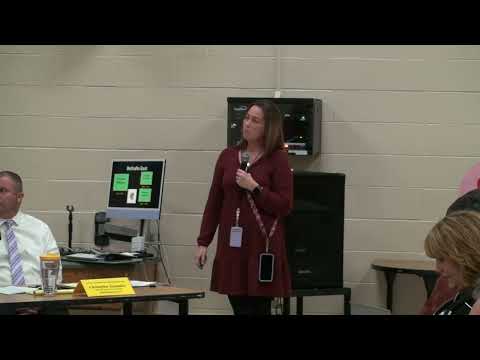
The district presentation on the Illinois School Report Card noted that this yearthe high school earned an "exemplary" rating while four other buildings were rated "commendable," and officials said the results reflect both local improvement efforts and statewide testing changes.
Presenter said the report, released on Halloween and covering the prior school year, shows Bethalto CUSD 8 now has 159 teachers, about 44% of whom hold a master's degree or higher, and three teachers who are nationally board certified. Average class size was reported around 22 students; student mobility is approximately 5% districtwide.
Why it matters: school ratings influence local improvement plans, resource allocation and public perception. District leaders framed the results as part of a continuous improvement cycle and connected staffing, attendance and targeted interventions to the outcomes.
The presenter emphasized attendance as a central factor in elementary and middle school ratings. Chronic absenteeism was defined in the presentation as missing 10% of the school year (about 18 days), counting excused and unexcused absences equally. "That's why parents, you're getting all of those reminders and phone calls and text messages," the presenter said, framing outreach and classroom incentives as a response to the metric.
Presenter described school-level results and practices: Bethalto East was listed as commendable but lacks scores for several indicators (English-learner measures, some science testing and the climate survey) because the building did not meet the minimum group sizes for those measures; those absent indicators (totaling 15 percentage points) were redistributed to other categories, increasing the relative weight of chronic absenteeism and proficiency for that school. Parkside earned full proficiency points in math, which the presenter attributed to a block of targeted instruction called "Eagle time," and officials said similar interventions are being expanded to ELA.
At Metobrook and Trippy, presenters said schools have made steady proficiency gains but continue to focus on growth measures and interventions for students who start below state proficiency levels. The presenter noted the state "rightsized" performance standards this year, which raised cut scores and made it more difficult to reach proficiency on some assessments, particularly science.
High-school ratings rely heavily on ACT-derived measures and graduation rates (four-, five- and six-year), plus a "ninth-grade on-track" metric that correlates with diploma completion. "The high school was exemplary this year," the presenter said, crediting staff, students and families for sustained effort.
During questions, a participant asked about changes to how absenteeism is measured. Melissa, speaking from the group, said next year the state will reframe the measure to emphasize presence: "So next yearthey're actuallyit will be the same, but instead of calling it chronic absenteeism, it will be called students in attendance." Melissa also said a proposed state accountability system would set fixed targets and allow ongoing monitoring throughout the school year.
Speakers also discussed statewide math performance. A respondent noted math scores fell after COVID and said the state removed some interim diagnostic testing after a three-year period, which compounded the difficulty of measuring and addressing the decline. The presenter and school teams plan a January data review and said they use intervention teams and a data tool called Edge Climber to transfer student-level supports and monitor progress across buildings.
District officials emphasized that the report card is one tool among many. They said the district will continue using PLCs, guiding coalition teams and targeted interventions to sustain gains, improve growth measures and address gaps in attendance and math performance.
The presentation closed with brief praise from meeting participants; no formal vote or policy action was recorded in the transcript.