Get Full Government Meeting Transcripts, Videos, & Alerts Forever!
Get email alerts on the Grants topic
No spam. Unsubscribe anytime.
East Haven pursues opioid, community planning grants; Overbrook study could lead to multimillion-dollar renovation
Summary
District staff described an opioid‑related grant application to support behavioral health services for infants with neonatal withdrawal, a $300k–$350k planning grant for Overbrook that could precede a $5M–$8M construction phase, and technology replacement planning using phased leasing ($285k this year as a partial tranche).
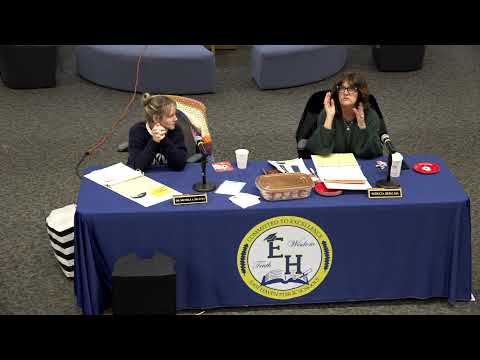
District staff at the East Haven School Board workshop outlined several grant and capital plans that could affect the district’s program mix and future construction budget.
The district said it applied for an opioid‑trust grant, describing it as a competitive application written with the Shore Health District. Staff said the opioid application would fund behavioral‑health supports — including a board‑certified behavior analyst (BCBA) and a social worker — to assist students affected by neonatal opioid withdrawal syndrome (NOWS). Officials said the opioid grant request equates to about $500,000 spread over three years.
A separate community investment planning grant for Overbrook would fund a planning and facility study, staff said, with the planning award estimated at roughly $300,000–$350,000. Officials described that study as the first step; the district would apply for construction funding in a later round, and staff gave a project-size range of roughly $5 million to $8 million depending on the expansion scope.
Staff stressed that many grants are one‑time funds: they can enable new facilities or pilot programs but do not replace recurring operating revenue. The district pointed to several successes — including a Perkins supplemental award (historically about $200,000) and a greenhouse grant — but warned that ongoing costs must later be supported from operating budgets or additional funding streams.
Technology and equipment: presenters described a phased approach to Chromebook and teacher‑device replacement rather than asking for a single $1 million one‑time appropriation. Officials said $285,000 is included this year — about 25% of the total replacement need — to replace the most worn devices and to put the district on a five‑year replacement cycle through leasing.
Fundraising and sponsorships: athletics and some student‑award costs are increasingly covered by sponsorships and fundraising. Staff said a fundraising effort by a named staff member has enabled removal of a $4,000 operating line for student awards in favor of sponsorship proceeds.
What’s next: staff said grant awards are pending and that planning studies (for Overbrook) would precede applications for construction funds; they also committed to sharing grant‑line placements and reporting updates to the board as funding outcomes become clearer.
Quote: "The opioid Grant is 500,000 over three years," a district official said, describing both the application and its intended uses.
Ending: The board will track grant outcomes and the district will return to the board with study results and any recommended next steps for capital funding.