Get Full Government Meeting Transcripts, Videos, & Alerts Forever!
Get email alerts on the Public Comment topic
No spam. Unsubscribe anytime.
Residents urge Poway Unified to revisit ethnic studies requirement and question past bond financing
Summary
Multiple public speakers at the Dec. 11 Poway Unified board meeting urged the district to remove a planned ethnic studies graduation requirement and criticized past bond financing, raising concerns about curriculum, enrollment decline in ethnic studies courses and the district's prior use of capital appreciation bonds.
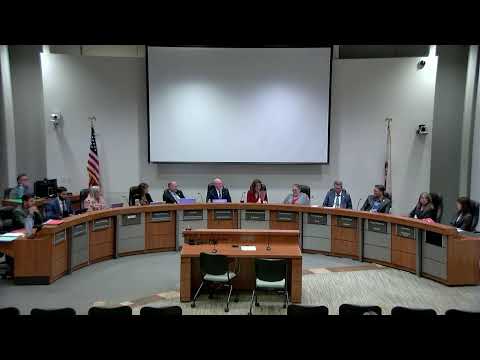
During the public comment period at the Dec. 11 Poway Unified board meeting, a string of speakers urged the board to reconsider the district’s approach to ethnic studies and questioned financial stewardship related to prior bond financing.
Nadia Khan, identifying herself as a parent and member of a parent advocacy group, described ongoing challenges Muslim students face and called on the board to prioritize culturally competent supports, saying the district must “restore reliable equity leadership and ensure every child can learn without fear or discrimination.”
Several speakers asked the board to remove the proposed ethnic studies graduation requirement and to consider the declining enrollment in those classes. Melinda Hunton provided a detailed critique of the district’s 2011 decision to use capital appreciation bonds (CABS) to finance part of Proposition C, describing the structure and long-term costs and asserting that the financing remained controversial. Hunton said a $105 million issuance ultimately produced repayment obligations that approached a near-billion-dollar figure under the original terms and asked whether the district had been sufficiently transparent about subsequent refinancing steps.
Other public commenters framed ethnic studies as a costly or divisive elective that should not receive priority amid budget pressures; commenters also urged the board to focus on core academic recovery efforts. In turn, trustees acknowledged the public’s concern and noted that the district will consider funding constraints and state law (commenters referenced AB 715 and AB 101) when finalizing graduation requirement policies. Several members of the public requested objective cost–benefit analyses before continuing funding for the courses.
What the board said: because some of the remarks referenced state funding and legal requirements, trustees said they would review applicable state guidance and report back during the policy update process. Because the ethnic-studies graduation question was raised during public comment and is also part of ongoing policy discussions, staff said the topic would be considered during the policy first readings and future agenda items.