Get Full Government Meeting Transcripts, Videos, & Alerts Forever!
Get email alerts on the Public Safety topic
No spam. Unsubscribe anytime.
Council approves one‑year police PBA agreement as members debate funding and pension impacts
Summary
Punta Gorda approved a one‑year Police Benevolent Association agreement with across‑the‑board increases, while council and staff debated short‑term use of reserves, pension cost implications and the need to identify sustainable funding sources amid state property‑tax uncertainty.
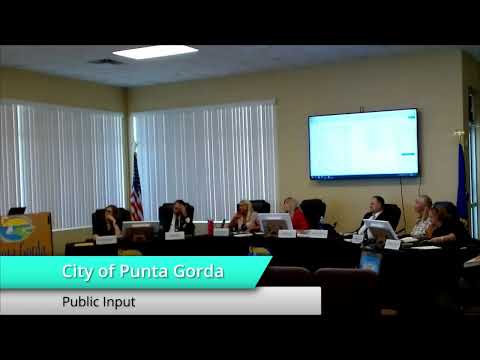
Punta Gorda City Council voted to ratify a one‑year Police Benevolent Association (PBA) agreement effective Oct. 1, 2025–Sept. 30, 2026, after intensive council debate about whether the city can sustainably fund the increase.
HR Manager Jeff Payne explained that the negotiated one‑year agreement raises the pay range for officers and gives existing sworn staff an overall 10% adjustment (some of which will be realized through annual merit steps). “Existing staff would go up 10%,” he said, explaining that part of that increase is tied to performance evaluation timing and that detective incentives and three personal days per year were included.
Finance Director Kristen Simeone told council the budget contained a 4% baseline for compensation increases but that the additional negotiated amounts would be covered initially by reserves and that the longer‑term impacts on pensions (which are actuarially sensitive to pensionable wages and assumptions) could raise the city’s required contributions materially in FY27 and beyond. Staff estimated a multi‑hundred‑thousand‑dollar increase in pension costs following recent actuarial experience changes.
Chief Pam Smith and department representatives urged approval, saying recruiting and retention pressures have made Punta Gorda less competitive with neighboring departments; Captain/employee speakers warned of high attrition if salaries remain uncompetitive. “We are now the second lowest paid,” Chief Smith said, urging parity to maintain staffing and public safety services.
Several council members expressed concern about using reserves for recurring compensation increases while the state is considering property‑tax reforms that could materially reduce local revenue in coming years. Members asked staff to explore alternative funding sources such as camera‑generated fines, other revenue measures and whether cost savings could be found in pension structure or expense adjustments. Some members proposed delaying or phasing increases; others said failing to act would risk officer departures and higher operational costs from overtime and recruitment.
After extended discussion the council approved the one‑year resolution authorizing the city manager to execute the agreement. Several council members said they expect staff to return with options to identify sustainable funding (revenue or budget adjustments) for future years.
Provenance: PBA presentation and debate begin SEG 4336; the council’s motion and vote to approve appear at SEG 4745–4750 with subsequent discussion and public testimony in SEG 4756–4950.