Get Full Government Meeting Transcripts, Videos, & Alerts Forever!
Get email alerts on the Education Funding topic
No spam. Unsubscribe anytime.
Students and residents press Yale to increase contributions as teachers and parents warn of crumbling schools
Summary
During the finance committee's public hearing, Yale students, local advocates and teachers urged larger voluntary contributions and state action to relieve school funding shortfalls; a teacher described storm damage, mold and unsafe classroom conditions.
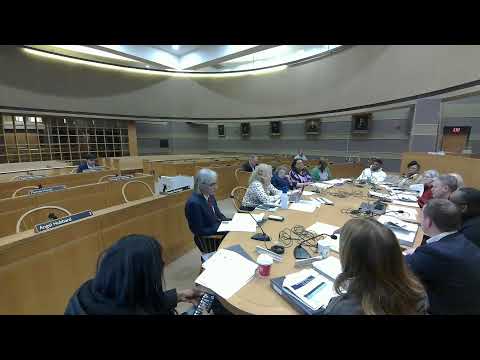
Several New Haven residents and Yale students used the finance committee's public hearing to press both the city and Yale University to do more for local schools.
Multiple speakers, including members of New Haven Rising and Yale student groups, argued that the city's new voluntary contribution agreement with Yale does not keep pace with the university's endowment growth and will not meet local needs when adjusted for inflation. "Yale's endowment has grown from $31 billion to $45 billion," said Arjent Warrior, a Yale senior who testified in support of New Haven Rising's demand for larger annual investments in the city.
Advocates said greater contributions would help avert school closures, reduce class sizes and fund after-school programs. "We could reduce class sizes and provide after-school enrichment if that $1 billion over time had been redirected," Jamie Myers McFale read on behalf of a New Haven Rising member.
A special-education teacher, Kimberly Smart, gave a firsthand account of damage to school buildings and classroom materials after a January storm, describing fallen ceiling tiles, water damaged rooms and ongoing heating and sanitation problems she says make teaching and learning difficult. "If schools were fully funded, teachers with already large classes would not have to deal with 27 students per class, and the buildings would not be in such disrepair," Smart said.
Committee members asked clarifying questions but did not take immediate action; the public hearing continues when the committee resumes departmental workshops on March 31.