Get Full Government Meeting Transcripts, Videos, & Alerts Forever!
Get email alerts on the School Budget Staffing topic
No spam. Unsubscribe anytime.
Public commenters urge Oyster River board to restore ELA interventionists as budget debate continues
Summary
Several residents and former educators urged the Oyster River Coop School District board to restore English language-arts tutors and interventionists, citing assessment data and warning that a failed budget vote could trigger larger staffing cuts under the default budget.
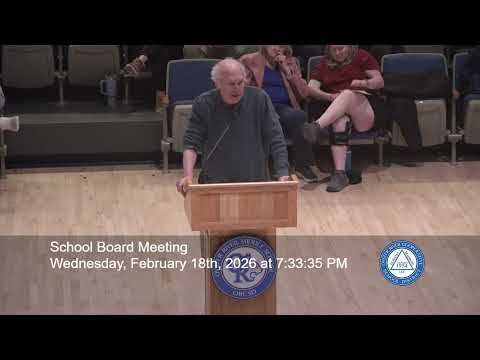
Members of the community told the Oyster River Coop School District school board on Feb. 18 that cutting ELA tutors and interventionists would harm students’ reading progress and contradict voters’ recent actions.
Retired educator Kobe Tridle, who said he taught multiple grade levels and led literacy training in New Hampshire and New York, cited district New Hampshire ELA assessment results and told the board that ‘‘25% of third graders and 28% of fourth graders’’ at some elementary schools scored a ‘‘one or a two’’ — levels he said are not proficient and indicate students need targeted intervention. Tridle called interventionists ‘‘best practice undisputably’’ and asked the board to reinstate the positions.
Tom Newerk of Durham added a procedural warning about the budget: he said the district’s default budget would be about $1.9 million less than the proposed budget and cautioned that a failed budget vote could lead to much deeper cuts, including involuntary layoffs driven by seniority.
Speakers at the public-comment portion also said they were confused and disappointed after the deliberative session, arguing voters had supported restoring five student-facing positions and urging the administration and board to respect that outcome. Ben Couture of Durham said he was ‘‘hearing reports’’ the administration might still move forward with layoffs and repurpose the additional funds the voters allocated; he asked the board to ensure the will of voters is honored.
At the start of the discussion, the chair told the audience that no final staffing decisions had been made and that budget implications depend on the outcome of upcoming votes. Board members encouraged residents to support the proposed budget to avoid the deeper cuts associated with the default.
The board did not take a final vote on staffing during the Feb. 18 meeting; public speakers and board comments left the question of restoring the ELA interventionists unresolved and contingent on the budget outcome.