Get Full Government Meeting Transcripts, Videos, & Alerts Forever!
Get email alerts on the Housing Capacity Analysis topic
No spam. Unsubscribe anytime.
Oregon City kicks off state‑mandated housing capacity analysis with Echo Northwest; staff says technical package due before May next year
Summary
City staff announced a multi‑year housing capacity and contextual needs analysis required under a recent state law, named Echo Northwest as consultant under a DLCD grant, described the technical scope and timeline and said technical documents must be completed "before May of next year." Commissioners discussed data sources (census block groups), how recent large projects are credited, and public outreach plans.
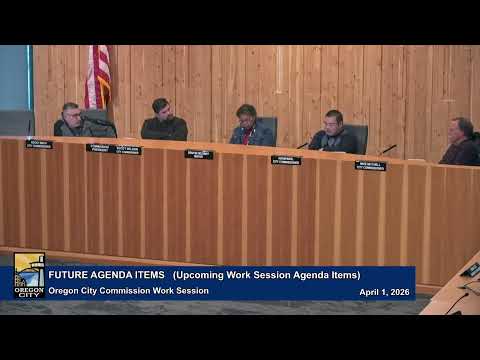
Oregon City staff on April 1 opened the technical phase of the state‑mandated housing analysis that will feed a later housing production strategy. Staff said the work combines a contextual housing needs analysis and a housing capacity analysis, will use state distributions and PSU methods for demographic and income‑based allocations, and will be supported by consultant Echo Northwest under a DLCD grant.
An unnamed city presenter (referred to in discussion as "Kelly") told the commission the technical package — the contextual needs analysis and the capacity analysis, which includes a buildable‑lands inventory and a development‑ready lands check — must be completed "before May of next year." The work will be run through the planning commission with specific touchpoints for the city commission, staff said, and will include a public project page, targeted focus groups and other outreach where appropriate.
Staff emphasized that the state distributes housing need by region and then to individual cities using census block‑group and tract data prepared with Portland State University methodology. Commissioners asked how the city will account for recent large proposals and recent construction; staff said unit counts start from a defined baseline date and that the process includes a five‑year lookback to record accomplishments, but that credits for recently approved or proposed projects will be handled according to the state’s annual data and are not expected to materially reduce the city’s assessed needs.
Staff said the next policy phase — the housing production strategy — will translate the technical findings into tools and actions to meet the state’s targets while preserving local character. That later phase will involve broader community engagement; the current technical work focuses on data validation and identifying where infrastructure makes land development 'development‑ready.' Staff said they will return to the commission for work sessions as key technical milestones are reached.
What happens next: staff will post a project page, coordinate consultant deliverables, and return with technical findings and recommended timing for the production‑strategy phase.