Get Full Government Meeting Transcripts, Videos, & Alerts Forever!
Get email alerts on the Documentary Ml K Simsbury topic
No spam. Unsubscribe anytime.
Student documentary spotlights Martin Luther King Jr.'s Summers in Simsbury, draws national attention
Summary
At a Simsbury Free Library screening, organizers screened a 2010 student documentary showing that Martin Luther King Jr. spent summers working on Connecticut tobacco farms; the project led to a town memorial, national media coverage and ongoing educational programming.
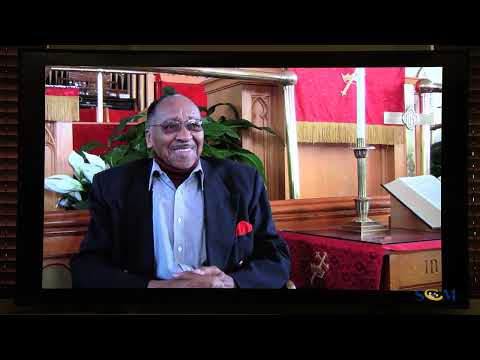
At a community event at the Simsbury Free Library, organizers screened a student-produced documentary detailing Martin Luther King Jr.'s summers in Simsbury and described the project's local legacy. The presenters said the film, produced by a 15-student team in 2010, helped confirm King's presence in town through five letters and led to a permanent memorial and school outreach programs.
The presenter credited the Simsbury Free Library and staff including T. J. Donahue, Jim Flynn and Tara Willerup for daily support during production and noted that the students raised substantial funds to build a teaching memorial based on the documentary's panels. "We couldn't have done that film without the help of the Simsbury Free Library and their partnership with us," the presenter said.
John Connor Malloy, identified in the program as one of the student leaders and a director on the project, recalled the day national crews arrived. He said CBS segment producer Steve Hartman filmed interviews and footage and that a Katie Couric producer contacted the team; later CNBC also covered the story. "It was a whirlwind," Malloy said of the production day, describing interviews conducted at the library and on-site shoots for broadcast pieces.
Presenters emphasized the documentary's contribution to scholarship and public history: they reported contacting Clayborne Carson and said a recent biography cited the student film in its footnotes — an "unusual" recognition for a high-school project, the presenter said. The students also used archival sources: employment cards, Morehouse scrapbooks and an audio clip in which King mentions being in Simsbury.
The film recounts that King worked on Cullman/Coleman Brothers tobacco farms in the summers of 1944 and 1947, that daily pay for farm workers was recorded as $4, and that dormitory housing provided congregation and religious activities that influenced King's early development. The presenters noted the Morehouse dorm later fell into disrepair and was demolished in 1984.
Organizers said the documentary produced concrete local outcomes: a memorial on town grounds, repeated community MLK observances that draw civic leaders, and school visits where students present the history to middle-school classes. Presenters detailed their next research steps, including identifying Morehouse students recorded on employment cards and tracing their later careers.
The event closed with an invitation to the public to contribute additional archival leads or personal recollections to expand the project's research.
The program did not propose a formal town action during the event; presenters framed the documentary as an educational project and a springboard for further local historical research.