Get Full Government Meeting Transcripts, Videos, & Alerts Forever!
Get email alerts on the Climate Infrastructure topic
No spam. Unsubscribe anytime.
San Mateo highlights new wastewater plant, leaf-blower ban and solar carports as climate and infrastructure wins
Summary
City leaders celebrated completion of a new wastewater treatment plant tied to a $1 billion clean‑water program, adoption of a ban on gas‑powered leaf blowers with a rebate program, and a solar‑carport project expected to offset a recreation center's energy use and save an estimated $450,000 over the project's life.
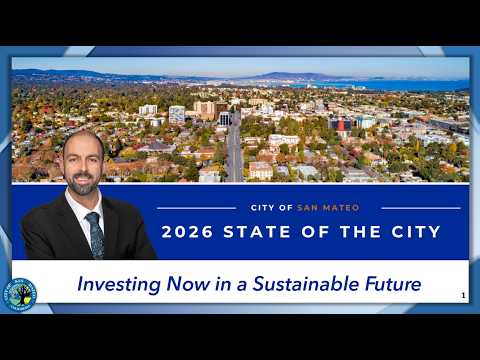
San Mateo’s 2026 address emphasized investments that pair climate goals with city infrastructure. Mayor Adam Lorraine described a newly opened wastewater treatment plant as a central piece of the city’s clean‑water program and highlighted a suite of policy choices and projects meant to reduce emissions and strengthen resilience.
The council recently adopted an ordinance prohibiting gas‑powered leaf blowers and launched an electric equipment rebate program that provides up to $100 for residents and up to $500 for local landscapers; the mayor said the transition timeline targets full compliance by Jan. 1, 2027. Lorraine also described the recently completed 'electrify building' strategy and updated reach codes to strengthen energy‑efficiency requirements for renovations.
As a demonstration project, the city will add solar carports at the Beresford Recreation Center under a power‑purchase agreement with Peninsula Clean Energy, which the mayor said allowed the project to be built without upfront city funds and will generate enough electricity to offset the building’s annual energy consumption and save an estimated $450,000 over its life. Officials said other near‑term adaptation work includes a storm drain master plan and a sea‑level rise adaptation plan supported by a state sustainable‑planning grant.