Get Full Government Meeting Transcripts, Videos, & Alerts Forever!
Get email alerts on the Redevelopment Old Townhouse topic
No spam. Unsubscribe anytime.
Committee split over whether to preserve or demolish old townhouse; public outreach set for April 28
Summary
A committee review of survey results and a redevelopment memorandum showed a near-even split between preservation and demolition among 181 valid survey responses. The panel discussed four broad disposition paths, cost estimates (report lists $4.1M in immediate repairs) and planned a public outreach meeting with a video tour and whiteboards on April 28.
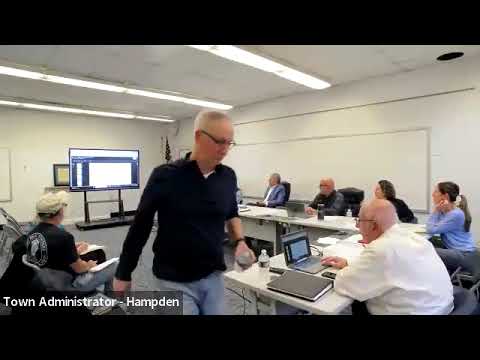
The long townhouse committee reviewed survey results and a draft redevelopment memorandum on April 1, as members worked to shape outreach for a public forum later this month.
A staff presenter told the committee they had received 182 survey submissions and removed one test response, leaving 181 valid responses. ‘‘You can see from here that most people are either very familiar or somewhat familiar with the project,’’ the presenter said, and noted that responses skewed older. Committee members said roughly 62% of respondents are aged 55–75, a pattern one member called consistent with local demographics.
The survey results showed a close split between respondents who favored demolition and those who preferred preservation or restoration. Among respondents who supported preservation, the building's exterior façade was the most-cited feature to retain. The presenter summarized common desired uses as a rentable community hall, arts/theater space, youth programs and some retail, while concerns centered on tax burden and affordability.
Committee members and staff reviewed a second version of a redevelopment memorandum and its appendix, which the presenter said compiles six years of town meeting notes, the master plan, the bond report, deeds and related documents. The memorandum flags building-condition issues (asbestos was mentioned), includes a full cost summary with a 15% planning adjustment, and outlines a matrix of options aligned with the master plan.
The report also references that the town has committed $8.3 million for a fire-station renovation, a fact members said affects the town's capital capacity. Committee members pressed for clearer presentation of options and asked that public–private partnerships and fire-department scenarios be added back into the analysis.
Cost questions were a focus. A committee member asked whether a limited set of repairs would trigger full accessibility (ADA) upgrades, noting that spending above certain thresholds can change the scope of required work. The group discussed the report's immediate-repair figure: ‘‘The number in the report for immediate repairs'is 4.1 million,’’ a committee member said. The presenter also noted line items (a $900,000 contingency and additional engineering fees) that together make the headline figure close to $4 million.
Members agreed the memorandum should be reframed into four clear disposition buckets (retain/do nothing, demolish, sell, lease), with sub-options beneath each. The committee asked staff to reintegrate additional options identified earlier (including phased renovation, leaseback and sale to a private developer) and to make the fire-department and public–private partnership options explicit.
To prepare for public engagement, the committee scheduled an outreach event and recommended materials to educate residents: a short video tour of the building, a one- to two-slide framing of the financial context and a shortened podcast-style overview. The committee also planned interactive whiteboards and sticky-note stations so residents could record preferences (for example, choosing demolish vs. preserve) and help capture input from people who did not complete the online survey.
A resident speaking during a point of personal privilege said he and others had met with staff and that a citizen petition to revisit the fire-station vote had been discussed privately; committee members cautioned that such comments should not be framed as the senior-center's position and urged direct dialogue with the fire department.
Next steps: staff will revise the memorandum into the four-bucket framework, add detailed cost breakout and ADA-trigger clarifications, arrange a short video tour, prepare summary slides and run the outreach event on April 28. The committee also approved previous meeting minutes at the start of the session.
What the committee did not decide: no formal decision was taken on demolition, sale or renovation at this meeting; members requested more detailed cost breakdowns and legal due diligence before moving to a formal vote.