Get Full Government Meeting Transcripts, Videos, & Alerts Forever!
Get email alerts on the Education Graduation topic
No spam. Unsubscribe anytime.
Oyster River board outlines how New Hampshire's "306s" will change graduation requirements and course planning
Summary
District officials told the school board that New Hampshire's new minimum standards (the "306s") shift graduation requirements to a competency-based model, add requirements such as financial literacy and statistics, and will require accelerated planning so incoming freshmen meet the new rules next year.
The Oyster River Cooperative School District on Oct. 16 heard a detailed briefing on New Hampshire's new minimum standards for public schools, often referred to as the "306s," and what the changes mean for high-school graduation requirements and local course offerings.
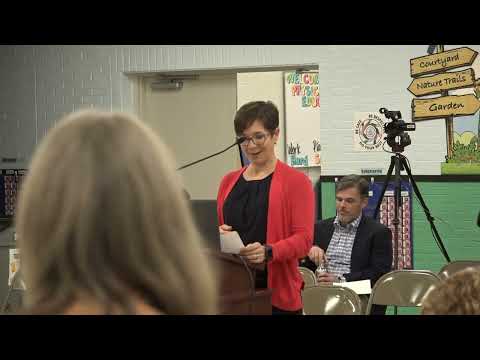
Assistant Superintendent Suzanne told the board the state's shift removes the traditional time-based Carnegie unit and moves to competency-based credits, a change that will mean "we will have kids that are working under different graduation requirements," with incoming freshmen subject to the new rules. She said the state diploma remains a 20-credit minimum but the 306s add and reorganize requirements including explicit financial-literacy content, New Hampshire history, a civics component tied to the naturalization exam, a new statistics requirement, and logic and rhetoric standards.
The district's current Oyster River diploma is 22 credits and includes elective space that could be reduced under the new framework. Suzanne summarized the effects: "If we implement courses for all these requirements, it diminishes the number of open opportunities for kids to make choices," and the district is exploring interdisciplinary approaches and experiential-learning options (ELOs) to meet requirements without sharply reducing electives.
Board members and administrators pressed on operational details. Counselors and administrators must track two separate graduation pathways next year — incoming freshmen under the 306s and returning students under the prior rules — and Suzanne said the district is working with high-school counselors to provide planners and tracking tools within PowerSchool so counselors can advise students accurately. She also noted the state will provide curriculum guidelines (for example, Common Core for English) but not the specific local competencies; the district must define local competency statements that document how students meet the new standards.
The social-studies team was identified as having the "heaviest lift," because the 306s require a combination of U.S. and New Hampshire history, government/constitution content, and civics. District staff are meeting with regional curriculum coordinators and other districts to pursue common approaches and to reduce unnecessary overlap in course content.
Superintendent Dr. Sheps and board members emphasized timeline pressure: program-of-studies revisions for the freshman class must be completed by December so counselors can advise students. Suzanne said departments are collecting proposals and that the policy committee will review board policies (notably policy IK and related items) that must be updated to reflect competency-based crediting.
What happens next: administrators will continue department-level curriculum work, run simulations for transferring students and middle-school courses that might carry high-school competencies, and return to the board with proposed program-of-studies language and policy changes ahead of winter counseling and scheduling deadlines.
The board will continue outreach on implementation choices and said it intends to keep the community informed as the district translates state guidelines into local competencies and graduation pathways.