Get Full Government Meeting Transcripts, Videos, & Alerts Forever!
Get email alerts on the Local Budgeting Governance topic
No spam. Unsubscribe anytime.
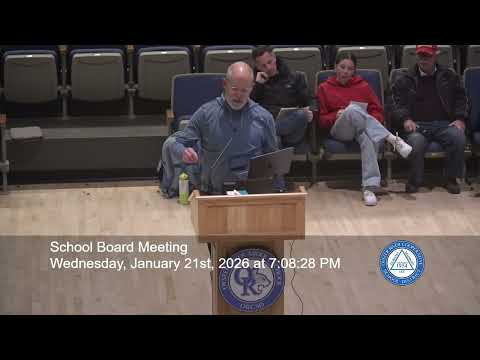
Oyster River board opposes four citizen petition warrant articles, citing loss of fiscal control and planning risks
Summary
At its Jan. 21 meeting the Oyster River Coop School District board unanimously voted to recommend 'does not recommend' on four citizen petition warrant articles — creation of a municipal budget committee, elimination of retained fund balance, a CPI‑tied tax cap, and a $60,000 performance audit — citing redundancy, constraints on planning, and limited vendor clarity.
The Oyster River Cooperative School District school board voted Jan. 21 to advise voters against four citizen‑petition warrant articles that would alter how the district sets its budget and handles year‑end funds.
The board unanimously recommended "does not recommend" on Warrant Article 10 (create a municipal budget committee), Article 11 (require all unassigned year‑end funds be used to reduce taxes rather than retained), Article 12 (adopt a CPI‑linked tax cap), and Article 13 (raise $60,000 for an independent performance audit). Board members and administrators said each proposal would either duplicate existing functions, reduce the board’s control over budget formation, or constrain the district’s ability to respond to mandated costs and emergencies.
"Personally, I think that as a board we should not recommend this article," the board chair said during the budget‑committee discussion, urging caution about creating a parallel elected body that would propose the district’s operating budget and alter public‑hearing and override mechanics.
Business administrator Amy Ransom explained the practical effects she and staff foresee if Article 10 passes: the municipal budget committee would prepare the proposed operating budget and could limit the school board’s discretion. She said the committee would also become the entity that holds the formal public hearing on the proposed budget, changing an existing process in which the board presents and defends its proposal to voters.
On Article 11, the board pointed to its current practice of retaining up to 5% of prior net appropriations as a prudent "rainy day" tool for unplanned costs — for example, boiler failures, sudden spikes in health‑insurance costs or unusually expensive special‑education placements. "If the district can’t retain fund balance for emergencies, a single major event could sharply increase the tax rate in one year," a board member said.
Board members and the superintendent also criticized the proposed CPI tax cap in Article 12 as overly restrictive. They warned that a statutory cap could force program reductions when costs outside the district’s control rise — including collective‑bargaining settlements or state‑mandated services — and would complicate long‑range planning.
Finally, on Article 13 the board noted the district already commissions annual financial audits and said the scope, vendor availability and expected deliverables for a separate $60,000 performance audit were unclear. Several members expressed reluctance to divert limited tax dollars to a broad performance review without clearer objectives and a vendor list.
All four motions to add school‑board "does not recommend" language passed on recorded votes of the board members present.
Next steps: the citizen petition articles will appear on the district ballot and be discussed at the Feb. 3 deliberative session. Board members assigned presenters for each article and planned to attend deliberative to explain the board’s recommendations.