Get Full Government Meeting Transcripts, Videos, & Alerts Forever!
Get email alerts on the Municipal Finance topic
No spam. Unsubscribe anytime.
First selectwoman: governor’s aid flat; town would need $3 million in cuts to hold taxes
Summary
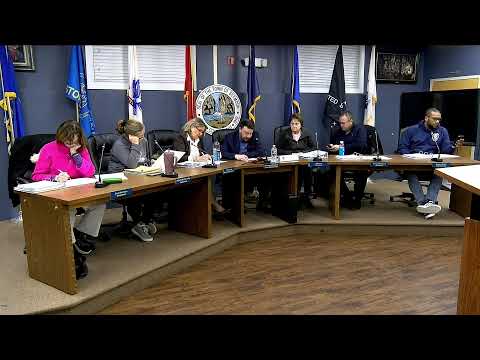
At a May 4 hearing the first selectwoman presented governor’s preliminary aid numbers and warned that to avoid a tax increase Seymour would need about $3 million in cuts; board members discussed permit revenue gains and redevelopment constraints at the Tritown plaza.
The town’s preliminary revenue outlook presented May 4 left Seymour officials confronting a projected shortfall that First Selectwoman Amory said would require deep cuts to avoid raising the mill rate.
"In order to have a zero rate increase in taxes, zero change in your mill rate, you need to cut $3 million from your budget," the first selectwoman said after reviewing governor's preliminary state-aid estimates. She told the board she had already identified $1.5 million in reductions. The board heard state estimates for property-in-lieu payments, motor vehicle tax allocations and education cost-sharing (education cost-sharing was shown near $11.7 million–$11.9 million in the governor's projections).
Jason, who presented the town’s revenue spreadsheet, said revaluation increased the grand list and that property tax revenue was estimated at roughly $53 million. He also reported other projected receipts, including $500,000 in supplemental car tax and $240,000 in conveyance fees, and noted permit revenue is rising with the new online building-permit system (projected permit revenue: $450,000). Jason said interest income is higher than budgeted and projected interest receipts could reach $925,000–$975,000, above the budgeted $600,000.
The first selectwoman criticized the governor's proposed budget as insufficient for municipal needs despite a large state surplus. "For a state that says they care about our children's education, they're not giving us anything," she said, noting prior years’ funding shortfalls and unfunded state mandates that land on local taxpayers.
Board members then discussed local revenue opportunities and constraints. Staff noted that some special funds — such as the bottle-deposit rebate, opioid-related funds, and dispensary tax revenues — are restricted to specific uses and generally can’t offset general operational expenses like public-works drug-testing programs.
The board also spent time on economic-development constraints at the long-vacant Tritown plaza, where a 99-year ground lease and ongoing litigation complicate attempts to attract commercial tenants and boost local tax revenue. The first selectwoman said litigation and an absentee owner have stalled redevelopment, and the board discussed potential legal remedies and the limited near-term tax benefit of the site.
The board scheduled deliberations on revenue and expenditures as part of its upcoming budget calendar; staff were asked to return with detailed supporting documents for further review. No formal decisions on tax rates were made at the hearing.