Get Full Government Meeting Transcripts, Videos, & Alerts Forever!
Get email alerts on the Charter Revision topic
No spam. Unsubscribe anytime.
Winchester Charter Revision Commission begins public hearings on clerk appointment, selectmen terms and board conflicts
Summary
At a March 12 public hearing, Winchester’s Charter Revision Commission heard residents and preliminary research on four proposed charter changes: shifting the Town Clerk to an appointed professional, considering four-year selectmen terms, prohibiting concurrent voting service on major boards, and tightening budget timelines ahead of a June Board of Selectmen review.
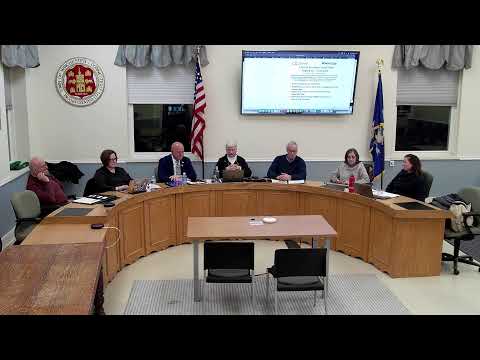
The Winchester Charter Revision Commission opened a public hearing on March 12 in the P. Francis Hicks Room to gather input on four charges from the Board of Selectmen: whether to lengthen Board of Selectmen terms, convert the Town Clerk from an elected to an appointed professional, limit concurrent voting service on major boards, and streamline the town budget timeline ahead of June and November deadlines.
Chair Candy Perez invited public comment and said the commission will meet the first and third Mondays at 5:30 p.m. through the spring, with the Board of Selectmen scheduled to review the commission’s work on June 15. Any charter changes must be finalized in time to appear on the November ballot or else meet a 15% turnout threshold if scheduled at another time.
Resident William Hester of Boyd Street urged making the Town Clerk a professional appointment, saying the office requires lengthy training and should not be subject to partisan turnover. "It’s sort of unfair that any person in that position is kind of having to campaign for his or her job," Hester said, adding that clerk certification and records duties create continuity concerns when incumbents are voted out.
Commission member Bill Hudak summarized the subgroup’s research on the clerk question, reporting that many Connecticut towns use appointed clerks: "In 75 out of the 169 towns in the state they have an appointed town clerk," he said, and in his sample 20 of 26 manager-form towns used appointments. Hudak and other commissioners said appointment can professionalize recordkeeping, elections administration and other statutory duties that require training.
Commissioners discussed the trade-offs. They noted state certification requirements for clerks, the value of institutional knowledge, and concerns that converting to an appointed position would require clear hiring and oversight procedures. Hudak offered to compile a more detailed description of clerk duties and certification paths for the committee’s report.
On concurrent service, commissioners reported drafting language to prohibit serving as a voting member on more than one "major" board or commission, defined in the draft as bodies with significant fiduciary, land-use or regulatory authority. The commission listed examples under consideration: the Board of Selectmen, Board of Finance, Planning and Zoning Commission, Zoning Board of Appeals, Board of Education, and the Inland Wetlands and Watercourses Agency. Residents and commissioners cited local examples—such as Highland Lake properties that became nonconforming by rezoning—where overlapping jurisdiction can require the same applicant to appear before multiple bodies.
Resident Jamie Colligan, who serves on multiple commissions, said colleagues frequently recuse when conflicts arise but asked whether a formal ban would reduce available volunteers. Commissioners acknowledged volunteer recruitment is a challenge—estimating the average age of current volunteers near 60—and discussed outreach efforts such as flyers and public events to attract a broader pool.
Research on selectmen term lengths is ongoing. Commissioners reported regional variation: many northwest-corner towns retain two-year terms while some shoreline towns use four-year (sometimes staggered) terms. The subgroup will examine staggering mechanics, minority-party seat protections required by state statute and other election effects before making recommendations.
Commissioners also reviewed charter amendment logistics. They said November general-election placement is generally preferable because it avoids the 15% turnout threshold for stand-alone referendums. The commission expects to hold another public hearing in May if needed and to continue subgroup research at scheduled Monday meetings.
A member moved to adjourn at the close of the hearing; a second was recorded and the motion passed by voice vote. The commission will continue its research and report back to the Board of Selectmen as it prepares final recommendations.