Get Full Government Meeting Transcripts, Videos, & Alerts Forever!
Get email alerts on the Water Infrastructure topic
No spam. Unsubscribe anytime.
Residents of Little Dixie and Flat Creek press Henry County for water service and grants
Summary
Several residents told the fiscal court they and neighbors lack access to county water, presented bids (total ~ $2.2M; Flat Creek about $1.3M; Little Dixie about $223,000), and urged pursuit of grants or a low‑interest loan; county officials said water line construction likely would be led by neighboring providers and KIPDA coordination.
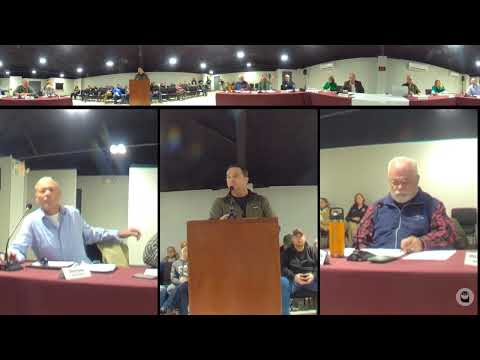
Multiple residents used the public‑comment period to urge Henry County officials to take action on long‑standing water access problems in Little Dixie and Flat Creek.
Resident Rhonda Hodges said she has worked three years with partners in Franklin County and KIPDA on water access and that about 10% of the county lacked access to county water in 1999 and still in 2020. She told the court that residents endured multi‑week outages during recent storms and urged the county to pursue grant funding or consider a low‑interest loan; she presented bids she said total about $2.2 million to serve both areas (approximately $1.3 million for Flat Creek and $223,000 for Little Dixie).
“The[re] is 2026 and there’s really no reason that we should be without or anyone should be without water,” Rhonda Hodges said.
Roger Hodges and Randy Harris described past interactions with county staff and county water extensions on county roads, recounted that some residents had to pay meter fees when lines were run to their properties, and urged officials to help bring service to properties that currently rely on wells with poor quality. County officials explained that water installation would likely be led by water utilities (North Shelby/Shelby County providers) rather than the county directly, and that KIPDA coordination and grant pursuit are ongoing. Officials said some grants and funding conversations have been held but that no direct grant was immediately available at the time of the meeting.
Why it matters: lack of reliable, drinkable water affects health and daily life for residents and can shape longer‑term decisions about housing and community development. Residents asked the court to prioritize funding or to assist with intergovernmental coordination to secure state or federal aid.
Next steps: county staff said they would continue coordination with KIPDA and water providers and look for grant opportunities; residents asked the court to keep water infrastructure on the priority list.