Get Full Government Meeting Transcripts, Videos, & Alerts Forever!
Get email alerts on the Gas Leaf Blower Ordinance topic
No spam. Unsubscribe anytime.
Salem committee keeps gas leaf-blower ordinance in committee after debate over exemptions, enforcement and battery limits
Summary
A Salem City committee heard public-safety, environmental and equity arguments over a proposed restriction on gas-powered leaf blowers, then voted to keep the ordinance in committee for further work after councilors and staff clashed over exemptions for city operations, commercial battery limits and how enforcement would work.
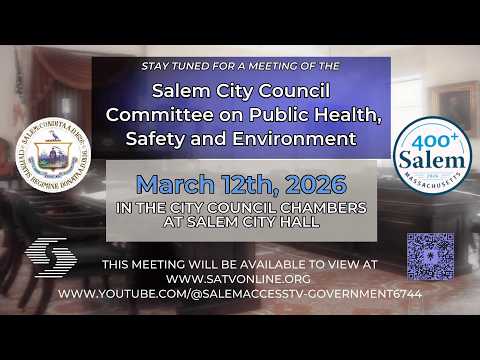
A committee of Salem City councilors on March 12 discussed a proposed ordinance to restrict gas-powered leaf blowers but voted to keep the proposal in committee for further refinement, citing unresolved questions about public-safety exemptions, commercial battery technology and enforcement.
Councilor Davis, who sponsored the measure, said the proposal grew out of resident concerns about pollution, noise and worker health and urged the council to find common ground. "Using a gas leaf blower for an hour can emit as much carbon as a car traveling 1,100 miles," Davis said, framing the ordinance as both an air-quality and occupational-health issue.
Supporters in the room and in public comment urged stronger limits. Danielle Henrian, a longtime advocate who said she has worked on the measure since 2022, told the committee she supports an outright ban with narrowly drawn emergency carve-outs. "I'm hoping that the fourth year is the charm and that we can get this over the finish line this year," Henrian said.
City operations and public-safety officials described routine uses of gas-powered backpack blowers that they say an ordinance must accommodate. Ray Joden of Salem DPS said the department uses blowers for street and park maintenance (he said the city has "about 35–36" parks) and for mutual-aid firefighting tasks. During a technical exchange, Joden said a commercial backpack blower battery currently lasts roughly 20 minutes in continuous use and estimated an eight-hour commercial shift could require on the order of 18 batteries—figures councilors said make full commercial electrification costly now.
The Fire Department chief described forestry and brush-fire work that relies on backpack blowers and asked that firefighting operations and mutual aid be explicitly exempted, noting that partner agencies use the same equipment.
Other councilors raised policy design questions. Some argued the ordinance should be seasonal (Memorial Day–Labor Day in the draft) to reduce disruption to landscapers and households; others suggested a phased schedule allowing municipal and commercial fleets time to replace equipment. Councilor Smith focused on enforcement and equity concerns, warning that calls to police would create disproportionate contact with Latino-owned landscaping crews and saying that, in nearby towns, bans are often not enforced. "You've created a new way of making a negative interaction between brown people in our community and the police," Smith said.
Jeff Cohen, a former councilor who spoke during public comment, said prior committee review did not resolve many concerns and cited a statement from the city's sustainability director that the measure would have a "negligible impact on the environment," arguing the council should prioritize measures with larger emissions effects while phasing any blower restrictions carefully.
Councilors and staff also discussed enforcement mechanics written in the draft ordinance (enforcement by police, building and health departments) and questioned whether the city has resources and procedures to achieve meaningful compliance.
After extended discussion, Councilor Smith moved that the committee leave the ordinance in committee for further work; Councilor Flynn seconded the motion. The chair counted five hands in favor and the committee kept the item in committee. The meeting then adjourned.
What happens next: the ordinance remains in committee; sponsors and staff are expected to refine exemptions, phasing schedules and enforcement language before the item returns to committee or the full council.