Get Full Government Meeting Transcripts, Videos, & Alerts Forever!
Get email alerts on the Opioid Funding topic
No spam. Unsubscribe anytime.
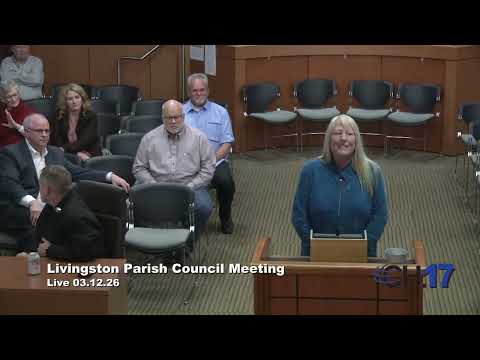
Livingston Parish Council awards $100,000 in opioid funds to SADD, authorizes contract with Stillwater Refuge of Hope
Summary
The council unanimously approved a $100,000 award to Students Against Destructive Decisions for prevention programs and authorized a contract using opioid‑litigation funds for Stillwater Refuge of Hope to provide transitional recovery housing at an estimated rate of $50 per person per night.
The Livingston Parish Council on March 12 unanimously approved two measures to direct opioid‑related funds toward local prevention and recovery programs.
First, the council adopted a resolution awarding $100,000 to Students Against Destructive Decisions (SADD) to support elementary field‑trip days, a summer camp, equipment for a new Amplify Center and six prescription drug take‑back days coordinated with the sheriff’s office. "And so the total request for this funding is a hundred thousand," said Dylan Ivy, executive director of Livingston Parish SADD. Ivy told the council SADD serves kindergarten through 12th grade and reaches about 27,000 students across the district.
In a related addendum item the council authorized the parish president to execute a contract with Stillwater Refuge of Hope to use Louisiana state and local government opioid litigation funds for opioid remediation, including safe transitional recovery housing, faith‑based recovery services, life‑skills training and community reintegration support. "What we were ... doing was it's $50 a night per, um, per person that stays," said a staff member explaining the program rate. Debra Hughes, president and founder of Stillwater Refuge of Hope, described services and outcomes: "Last year we housed 45 women and six children," she said, noting the organization provides structure, accountability and some treatment services.
Both measures passed by unanimous voice vote after brief discussion and motions by Councilman Mangus (seconded for the SADD resolution by Councilwoman Sandifer) and the addendum motion authorizing the Stillwater contract (moved and seconded, vote recorded as unanimous). The council did not specify a total contract ceiling for the Stillwater agreement in the discussion; staff described the provider rate and said limits would be applied so stays are not open‑ended.
Why it matters: The funding directs opioid‑litigation and parish resources toward both prevention in schools and direct remediation services in the community, including transitional housing for people with substance‑use disorders. The SADD award supports outreach to thousands of students; the Stillwater contract provides a local placement option for women needing recovery housing.
Next steps: The SADD award was approved immediately by resolution. The council authorized the parish president to sign the Stillwater contract; staff will finalize terms and implement limits on length of stay and billing to the opioid fund as described during the discussion.