Get Full Government Meeting Transcripts, Videos, & Alerts Forever!
Get email alerts on the Use Of Force Report topic
No spam. Unsubscribe anytime.
NCRB research team previews draft 2026 use-of-force report, flags data gaps and calls for joint public forum
Summary
NCRB researchers presented a draft 2026 Use of Force report showing demographic concentrations of force, category shifts in coding (rise in “soft empty hand”), and recommended clearer force classification, refreshed training across careers and a public forum before final publication in May.
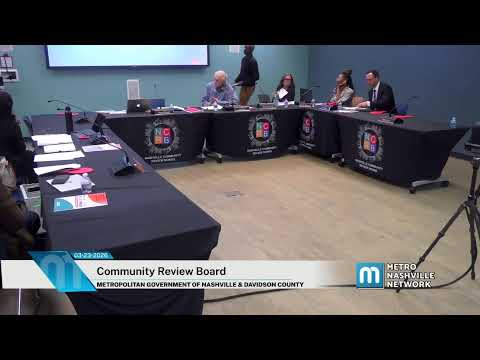
Research staff presented the NCRB’s draft 2026 Use of Force report at the March 23 meeting and asked board members for feedback ahead of a planned public forum in April and a target publication in May.
Andrea, the research presenter, told the board the draft combines dashboard data and a bivariate analysis (2021–2025) and that the strongest associations with force severity were incident context variables — reason for force and resistance type — rather than officer demographics. The presenter said 57.3% of subjects of force in the 2024–25 dashboard data were coded as Black and that younger adults (18–34) and male subjects were overrepresented.
The presentation identified three principal concerns: inconsistent or unclear coding across years (notably a sharp rise in “soft empty hand” entries in 2025), incomplete inclusion of relevant force types on dashboards, and insufficient community- and youth-focused engagement in implementation of prior recommendations. The report recommends tighter, consistent force classifications, routine quarterly reports to the NCRB, scenario-based and career-spanning refresh training, and further review of use-of-force proportionality in cases coded as passive resistance paired with chemical spray or taser use.
Andrea said the draft will be revised after community input: the research team plans a public forum in April to collect feedback and aims to publish the final report by the end of May. Board members asked for clarification on data coding definitions and whether supplemental youth- or SRO-focused analysis could be added; Andrea said a supplemental youth-focused analysis is planned.
Key takeaways • Data gaps and category ambiguity hamper year-to-year comparisons (example: a marked increase in “soft empty hand” coding in 2025). • Resistance type and officers’ stated reason for force were meaningfully associated with force severity; some pairings (passive resistance with chemical/taser use, disobeying commands with taser/chemical use) suggest areas for policy review. • The research team recommended tightened coding, ongoing refresh training across an officer’s career, and more community engagement before the final report is published.
The board applauded the presentation and agreed to provide feedback to the research team before the planned April public forum; no board vote was required at this meeting.