Get Full Government Meeting Transcripts, Videos, & Alerts Forever!
Get email alerts on the Housing Law topic
No spam. Unsubscribe anytime.
Appeals Court hears landlord–tenant dispute over rental accounting and attorneys’ fees under c.93A and c.186 §14
Summary
In Goose v. Hyestan Industries, counsel disputed whether payments created a tenancy, whether a later ledger and notice accurately stated rent owed, and whether the trial judge properly applied Lodestar fee analysis when awarding attorneys’ fees after tenants prevailed on possession and statutory claims.
The Appeals Court heard competing arguments in Goose v. Hyestan Industries about whether the landlord lawfully sought retroactive rent and whether the trial court properly calculated attorneys’ fees after tenants Angela and Christopher Guz prevailed on counterclaims.
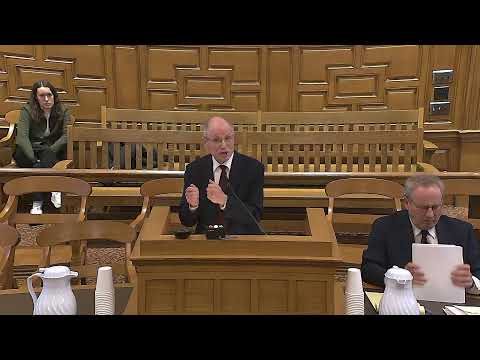
Appellate counsel Joel Feldman argued that the trial court erred in cutting the fee request (from the petitioned $12,000) based on a perceived "disproportionality" between low statutory damages and hours expended, without following Lodestar analysis or sufficiently accounting for the statutory purpose of fee-shifting under G.L. c.93A and c.186 §14. Feldman said trial counsel had to litigate aggressively to obtain possession and counterclaim relief, and that an across-the-board cut discourages attorneys from taking eviction-defense cases for low-income tenants.
Opposing counsel Lawrence Farber said the record supported the judge’s view that the level of time expended was disproportionate to the interests at stake in the trial (a roughly 45-minute bench trial) and that the court’s reduction was within its discretion. Farber also disputed that a tenancy was created by early payments, pointing to contemporaneous notices, a reservation of rights and the post-hoc ledger that reflected the landlord’s accounting for use-and-occupancy.
A recurring factual question was timing and contemporaneous documentation: the panel pressed whether the ledger and the later notice to quit were contemporaneous with the landlord’s alleged demand for $1,000 monthly rent or whether they were created after litigation focused the issue. Panelists also raised the public-policy dimension: fee awards under consumer-protection statutes are meant to encourage counsel to represent low-income claimants, but courts also weigh proportionality and reasonableness.
Why it matters: The court’s ruling will speak to how Lodestar-style analysis and proportionality weight attorney-fee awards in small-dollar statutory claims associated with housing and evictions, an area with acute access-to-justice concerns.
Argument concluded without immediate decision; the court will rule in writing.