Get Full Government Meeting Transcripts, Videos, & Alerts Forever!
Get email alerts on the Criminal Procedure topic
No spam. Unsubscribe anytime.
Appeals Court presses prosecutors and defense on prior-bad-acts, severance and immunized witness in Hill appeal
Summary
In Commonwealth v. Hill, the defense argued that admission of highly inflammatory earlier allegations and testimony from an immunized witness prejudiced a later trial on a separate incident; the prosecutor said corroborating evidence (video, 911 call) made any error harmless. The panel probed admissibility standards and preservation.
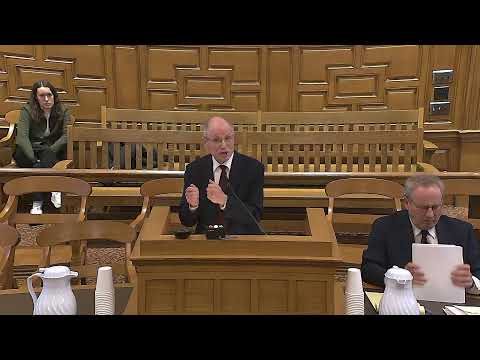
At oral argument in Commonwealth v. Hill, defense attorney Philip Weber told the panel that evidence of prior violent incidents — including a gun held to a victim’s head and an alleged trigger pull the night before another charged assault — should have been excluded or the counts severed because they unfairly prejudiced jurors called to decide the narrower offense the following day.
"These allegations from the 23rd are massive," Weber said, arguing that graphic prior-night testimony converted a single act into a perceived pattern of conduct and put the defense at a substantial risk of miscarriage of justice.
Weber also pressed that a key witness was immunized and thus unavailable for corroboration, leaving the Commonwealth with little admissible support for the 23rd-night allegations. He urged that admission of that prior material — and the trial court’s refusal to sever — was sufficiently prejudicial to warrant reversal or remand.
Assistant District Attorney John Wendell countered that the evidence for the charged 24th-night offense was strong: "You can see the entire vehicle shake and she immediately gets out. She has a broken jaw; there are multiple witnesses; there's a 911 recording," Wendell told the panel, urging that any error in admitting prior acts did not create a substantial likelihood of a different outcome.
The panel’s questioning focused on the familiar three-part analysis for prior-bad-act evidence (motive, intent, identity/absence of accident), the test for harmless error, and whether the defense’s motion to sever had been properly preserved. The judges also asked whether contemporaneous limiting instructions were given and whether the trial record included jury-targeted instructions about how to treat evidence of other alleged incidents.
Why it matters: The court’s decision may refine how Massachusetts courts balance highly prejudicial prior-bad-act allegations against legitimate purposes such as intent or absence of mistake — especially where one incident was connected to an immunized witness and where video or 911 records exist for the charged offense.
Argument closed without an immediate ruling; the panel will issue a written decision.