Get Full Government Meeting Transcripts, Videos, & Alerts Forever!
Get email alerts on the Transportation topic
No spam. Unsubscribe anytime.
Southgate updates code to speed EV charger permits; developers and fleet electrification proponents back change
Summary
Council adopted streamlined ministerial permitting for electric‑vehicle charging installations to comply with state law and speed building‑safety reviews. Local developers and a fleet electrification applicant urged faster, clearer rules to get projects built.
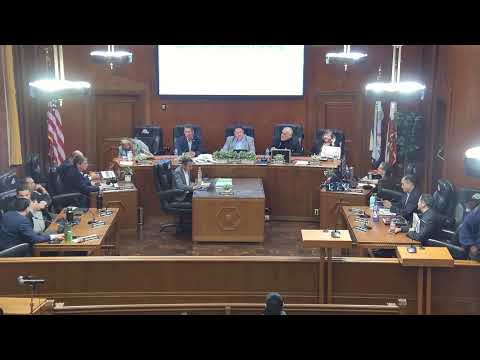
The Southgate City Council on March 24 adopted changes to municipal code to create a ministerial, streamlined permitting path for electric‑vehicle charging stations, aligning local rules with California Government Code 65850.7 and other state requirements.
Planning and building staff told the council the ordinance will move qualifying EV projects through an administrative review and building safety check rather than discretionary planning hearings, reducing processing time for homes, businesses and fleet projects. Planning fees remain (staff estimated a plan‑review fee of approximately $563 for the initial planning review; building permit fees would be charged at plan‑check), and building safety will continue to require ministerial checklist items for installations.
Local applicants asked for speed and clarity. Nibil Huzu, who said he plans to convert a diesel fleet yard on South Atlantic into an electric fleet terminal, urged the council to adopt the streamlined code to enable projects that could mitigate localized air pollution: “We have an opportunity to position Southgate as a progressive city adopting renewable fleet charging,” he said. Architect John Catalo, who is working with the applicant, told council that streamlined, predictable review would remove a major impediment to investment and state or federal grant eligibility.
Council members pushed planning staff on permitting fees, timelines and the scope of ministerial review; staff emphasized that the ordinance only streamlines the review process and does not waive building‑safety standards. Members also discussed residential home charger permitting and payment or pricing options for public chargers on city property.
The ordinance passed on roll call without recorded dissent. Supporters said it will help prospective projects — including one applicant who is seeking to close escrow in May — move forward quickly and place the city in a better position to compete for grants that require jurisdictions to be in compliance with state standards.
What happens next: staff will implement a ministerial checklist for eligible EV installations and route qualifying applications directly to building safety for expedited review. Council directed staff to return with any administrative fee or implementation details if adjustments are needed.