Get Full Government Meeting Transcripts, Videos, & Alerts Forever!
Get email alerts on the Valley Link Transmission topic
No spam. Unsubscribe anytime.
Residents urge Appomattox supervisors to oppose Valley Link transmission line and proposed data center
Summary
Multiple residents told the Appomattox County Board of Supervisors they oppose the Valley Link transmission line and a proposed data center, arguing the projects would cut wide corridors through private land, harm wildlife and property values, and shift costs to local taxpayers; speakers asked the board to adopt a formal opposition resolution.
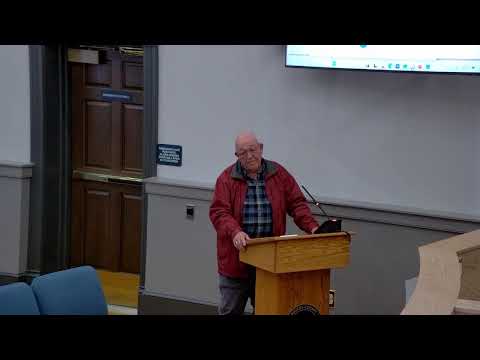
Several Appomattox County residents used the public‑comment period at the board’s March meeting to press supervisors to oppose a proposed Valley Link 115‑mile transmission line and a planned data center in the county.
Nathan Brown, who said he and his wife own a 50‑acre homestead in Oakville, described finding that the proposed 764,000‑volt line “goes right through our property,” including the pond at the center of their future home site, and asked whether the board has a position and could vote to join other counties resisting the project.
Leslie Brown, who said the line would run “through the heart of our property,” raised safety and fire risks, potential electromagnetic‑field exposure and an anticipated loss in property value that she said would prevent resale.
Sarah White of Concord told the board the transmission line proposal would “seize over 2,700 acres” and cut a 200‑foot‑wide corridor through forests and farmland, disturb wildlife and pollinators, and asked why rural counties should shoulder the cost of grid upgrades she said primarily benefit Northern Virginia data centers. She urged the supervisors to “pass a resolution to oppose this project.”
Chris White, who identified himself as an engineer and local resident, said residents were notified late of a Valley Link public meeting and criticized developers’ responses at that session. He asserted the projects “benefit nobody except … the power hungry data centers” and asked the board to “take an official opposition position.”
Other commenters — including Sarah Elliard and Robin Fouts — pressed similar points: that the route description understates impacts on working agricultural land, that residents deserve a meaningful opportunity to submit questions in advance of EDA meetings, and that the board should coordinate with neighboring counties that have expressed resistance.
Board members did not adopt a formal opposition during the portion of the meeting covered by the transcript. Several speakers requested that the board consider drafting or voting on a resolution opposing the transmission line and data‑center proposal; supervisors did not record a final action on that request in the provided record.
The public comments at the meeting reiterate concerns commonly raised in rural communities facing large‑scale energy and data infrastructure: land‑use change, decommissioning and cleanup, environmental impacts, property‑value effects, notification and public engagement. Residents asked for specific next steps from the board, including a formal resolution and coordination with other counties that have already taken positions.