Get Full Government Meeting Transcripts, Videos, & Alerts Forever!
Get email alerts on the Women In Agriculture topic
No spam. Unsubscribe anytime.
California Farm Bureau’s first woman president highlights farm losses, rising costs and local sustainability
Summary
In an interview with California Department of Food and Agriculture Secretary Karen Ross, Shannon Douglass, the first woman elected president of the California Farm Bureau Federation, described her pathway into agriculture and warned that about 20% of California farms (roughly 15,000) have disappeared in the past decade, citing sharply higher regulatory costs and urging region-tailored sustainability practices.
Shannon Douglass, the first woman elected president of the California Farm Bureau Federation, said in an interview with California Department of Food and Agriculture Secretary Karen Ross that California has lost about 20% of its farms—roughly 15,000—over the past 10 years and that regulatory costs have risen dramatically for smaller operations.
"In the last 10 years, we've lost 20% of our farms. That's 15,000 farms in California gone," Douglass said, framing the trend as concentrated among small and mid-size family farms. She added that those farms face a "1,400% increase in regulatory costs in just 18 years," a figure she presented as part of explaining why some family operations struggle to stay in business.
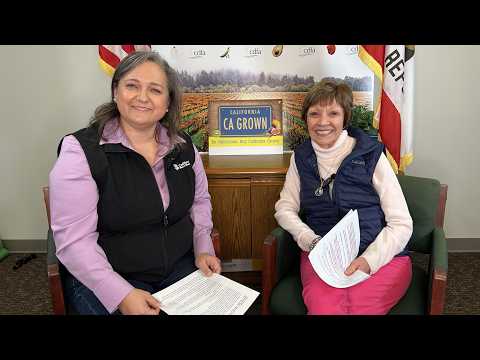
Ross opened the interview by saying the Department of Food and Agriculture is spotlighting stories about women in leadership for March and introduced Douglass as the Farm Bureau’s first female president. The conversation traced Douglass’s nontraditional route into agriculture—4‑H and FFA participation, college organizing on a local ballot measure, and early involvement in Farm Bureau’s Young Farmers and Ranchers program—which she said provided opportunities to learn grassroots organizing and advocacy.
Douglass emphasized that Farm Bureau represents a wide range of commodities and farm sizes and argued that retaining small family farms matters for local food systems. "We represent over 400 commodities," she said, and described the organization as a vehicle for engaging the next generation of farmers.
Both Douglass and Ross framed sustainability as practical, farm-by-farm work rather than a single label. Douglass and Ross discussed practices such as cover crops, low‑till and composting as tools that can help soil productivity but stressed that practices must fit regional climates and cropping systems. "What works in Modoc County is probably not going to work in Ventura County," Douglass said, arguing for flexibility in on-farm solutions.
Ross cited a recent presentation to the State Board from the department’s scientific advisory panel for the Environmental Farming Act and used the example to highlight the diversity of farming approaches across the state.
On balancing leadership and family life, Douglass said the role is full time and requires trade-offs. She described leaning toward family at some moments and toward work at others and said family-friendly aspects of agriculture helped: her son, she said, is 13 and still involved in farmers markets and farm life.
Douglass urged young women and others to consider the range of careers within agriculture—from research to on‑farm operations and sustainable practice work—and to be willing to pivot. "There's a place for you in agriculture," she said, encouraging students she meets through FFA and other programs to keep options open.
Ross closed by noting that the United Nations has declared 2026 the Year of the Women Farmers and said the department will continue telling stories about people in agriculture to inspire the next generation.
The interview was presented as a department feature highlighting leadership and workforce issues in California agriculture; no formal votes or policy decisions were taken during the conversation.