Get Full Government Meeting Transcripts, Videos, & Alerts Forever!
Get email alerts on the Environmental Restoration topic
No spam. Unsubscribe anytime.
Audience questions Sullivan: Kellogg Dam removal, lamprey and local village sites draw tribal response
Summary
At a Milwaukie community talk, audience members asked about the upcoming Kellogg Dam removal and local historic village sites. David Harelson of the Confederated Tribes of Grand Ronde said dam removal could benefit salmon and lamprey passage but cautioned about system-wide small dams and the complexity of restoring lakebeds and habitats.
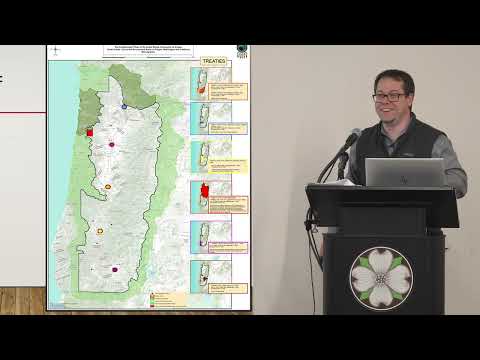
During a community placekeeping talk in Milwaukie, audience members asked about the planned removal of Kellogg Dam and the presence of historic tribal village sites in areas now developed. David Harelson, cultural resources department manager for the Confederated Tribes of Grand Ronde, responded that dam removal can be beneficial for salmon and other anadromous species but requires careful restoration planning.
An audience member asked, “Do you have any thoughts about the Kellogg dam removal in a couple years?” Harelson said he welcomed the project but stressed that small concrete sill dams throughout the watershed also block passage for lamprey — an anadromous species that is often overlooked in restoration planning. He explained that lamprey can navigate certain natural features that salmon cannot but are impeded by artificial 90-degree concrete barriers and small dams.
“Those little sill dams in a system prevent passage just as much because they create a 90-degree angle and it breaks the seal as it comes over,” Harelson said, urging planners to consider system-wide barriers when designing fish passage improvements.
In response to a second question about historical village sites in what the questioner called 'Balaki,' Harelson said encampments existed nearby and named several traditional village locations around the falls and along the Clackamas River — including a village under the Abernathy Bridge (Kosuk Shik) and other sites upstream — to illustrate the region’s dense pre-contact habitation.
Harelson emphasized trade-offs in restoration work, noting that removing large dams can reveal lakebeds that will need ecological and cultural planning. The Q&A underscored community interest in how ecological restoration and placekeeping intersect with local history.