Get Full Government Meeting Transcripts, Videos, & Alerts Forever!
Get email alerts on the Resolution 256 50 topic
No spam. Unsubscribe anytime.
Arcata council unanimously adopts resolution demanding immediate end to U.S.-Israeli war against Iran after heated public comment
Summary
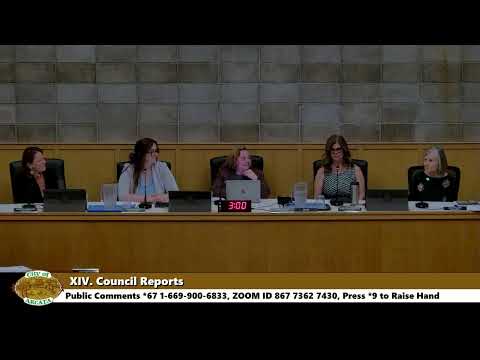
The Arcata City Council on March 18 unanimously adopted Resolution 256-50 calling for an immediate end to the U.S.-Israeli war against Iran after more than an hour of public comment featuring starkly divided views from local residents and advocacy groups.
Arcata’s City Council voted unanimously on March 18 to adopt Resolution 256-50 “demanding an immediate end to the United States-Israeli war against Iran,” moving the item to the start of new business to allow an extended public comment period.
The vote followed lengthy public testimony from dozens of residents, online callers and advocacy groups. Supporters framed the resolution as an anti-war statement and a moral stance against escalating military action, while opponents said the measure was one-sided and risked stigmatizing Jewish residents and others in the community.
“Thank you so much for bringing this so quickly to a vote on the Council,” said Dan Shaheen, one of several in-person speakers urging the council to adopt the resolution. Another supporter, Eileen Mandelbaum of Mobilize Arcata, said the group sought to amplify local voices and to press elected officials to act promptly.
Opponents included Tam Kreigel, who described the resolution as politically motivated and said it targeted Israel and members of the local Jewish community. “A true peace movement builds bridges. It does not single out one nation,” Kreigel said during public comment.
City Manager Merritt Perry introduced the item and deferred to Council Member Shafer, who had proposed the resolution. Councilmembers who spoke in the public deliberation framed the vote as a local expression of opinion on a national issue. Several members said they did not expect the resolution to directly alter federal policy but considered it important as a local statement and a reflection of constituent concerns about federal military spending and oversight.
Supporters urged that the council’s action be forwarded to higher levels of government; speakers in the public comment period suggested sending copies to Congress and the United Nations. The council took no additional binding steps beyond adopting the resolution itself during the meeting.
The council’s adoption came after the mayor confirmed the hybrid meeting format and the council’s earlier decision to move the resolution to the beginning of new business so those wishing to speak would not have to remain through the entire agenda. The measure passed on voice vote with all present members voting in favor.
The council meeting transcript shows sustained public engagement on the topic, with multiple callers and in-person speakers expressing both strong support for and strong opposition to the resolution. The city did not record any intervening formal amendments to the resolution during the public meeting; the text was adopted as presented in the agenda packet.
The council’s action is a policy statement of the Arcata City Council; further distribution or transmittal of the resolution to state or federal officials was requested by speakers but was not specified as a required or automatic next step in the meeting record.
The council moved on to other agenda items after the vote; there was no recorded motion to reconsider during the meeting.