Get Full Government Meeting Transcripts, Videos, & Alerts Forever!
Get email alerts on the Judicial Nominations topic
No spam. Unsubscribe anytime.
Judiciary Committee reviews 14 Superior Court nominees amid questions on experience and outside ties
Summary
The Judiciary Committee on April 2 heard opening statements from 14 Superior Court nominees and pressed several about courtroom experience, temperament and outside employment. Two nominees drew sustained scrutiny over corporate ties and past administrative or police matters.
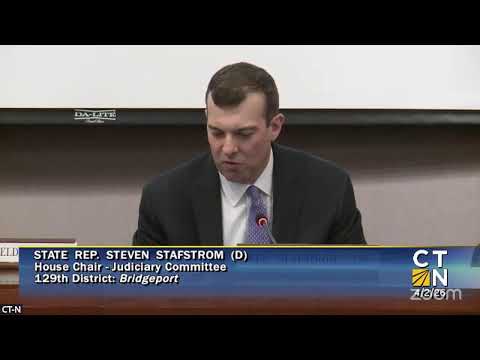
The Judiciary Committee on April 2 held a public hearing on nominations to the Superior Court, hearing opening statements from 14 nominees and extensive questioning from committee members. Chairs Winfield and Stafstrom outlined the process at the morning start and asked each nominee to take an oath, deliver a brief opening statement and respond to committee questions.
Several nominees framed their candidacies around public service and long legal careers. Campbell Barrett emphasized 30 years in family law and appellate work and drew praise from lawmakers for his pro bono and mentoring efforts. Theodore Doolittle and Patrick Ring highlighted substantial trial and appellate experience; Rosemary Weber underlined decades handling abuse-and-neglect and state-agency litigation and drew bipartisan commendations.
Committee members repeatedly pressed several nominees on courtroom readiness. Jeff Beckham and other nominees with recent executive-branch or in-house experience were asked to explain how they would manage first cases on the bench and to describe concrete steps taken to refresh courtroom practice and rules of evidence.
Two nominees prompted extended exchanges. One nominee faced detailed questions about a former employer’s collapse and a subsequent federal investigation; she said the company’s founder acted alone in submitting misleading investor materials and that in-house staff were not party to those actions. Separately, another nominee answered multiple questions about a 2019 domestic-incident summons and an administrative suspension of a New York law license for a missed registration/continuing-legal-education step. He told the committee the 2019 matter was resolved informally and that the New York suspension was administrative and has since been remedied.
Committee members also raised broader questions about judicial temperament, systems of accountability for judges, and resource constraints in the judicial branch, noting concerns about understaffing of clerks and marshals when adding judges to the bench. Several lawmakers recommended that nominees explain how they would remain accessible to the bar and court staff and how they would build structures to ensure accountability beyond self-monitoring.
The committee recessed without votes; members said nominations may be taken up at a future date. The hearing also drew routine acknowledgements of nominees’ family members and of the heavy workload facing the courts.
The committee is expected to reconvene in early April to consider additional referred legislation and to schedule final action on the pending nominations.