Get Full Government Meeting Transcripts, Videos, & Alerts Forever!
Get email alerts on the Education Special Education topic
No spam. Unsubscribe anytime.
State facilitators explain 'facilitated IEP' option to North Kingstown parents
Summary
Rhode Island Department of Education staff described the state's voluntary facilitated IEP/504 service at a North Kingstown Special Education Advisory Committee meeting, explaining how facilitation differs from mediation, how to request it, and tips for parents and school teams.
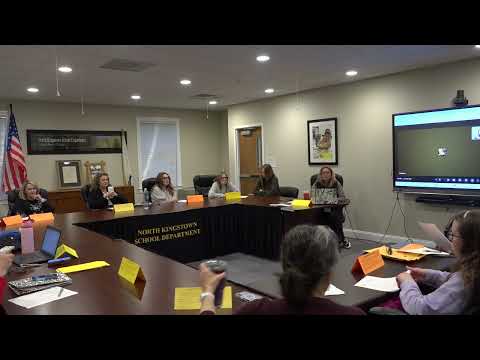
At a North Kingstown Special Education Advisory Committee meeting, facilitators from the Rhode Island Department of Education outlined the state’s facilitated IEP and 504 service and how families and school teams can use it to resolve disagreements without formal dispute processes.
Rhode Island Department of Education staff said the program was introduced to the state General Assembly in April 2023, funded in May 2023, and began offering services in March 2024. Presenters said the service is intended to strengthen parent engagement at IEP meetings and provide a neutral, process‑focused third party to help teams reach a shared understanding.
Presenters described facilitated IEPs as a voluntary alternative to formal dispute options such as mediation, state complaint or due process. They emphasized that facilitation does not prevent families from later pursuing formal dispute remedies if needed, but is designed to keep the student at the center of discussion and to improve communication and consensus at the meeting.
Facilitators outlined the approach they use in meetings: advance strategic planning (preconference calls with family and district), a visible agenda and charts during the meeting, and a three‑step agreement routine — make a proposal, check for understanding, then check for agreement — so decisions are explicit and implementation details are clear. Presenters said they have used visual “A” markers to show team agreement, and they coach teams to slow down, surface assumptions and clarify how services will be delivered.
RIDE staff told attendees they have done more than 200 formal facilitation requests as of January and that they continue to train district staff through a contractor (Key to Ed) so districts can eventually adopt facilitative practices independently. The presenters said about 70% of facilitation requests come from families, with districts, child‑welfare workers and community organizations also referring cases.
On logistics, facilitators recommended at least two weeks’ notice when possible, said facilitation is free to families, and noted materials (including request forms and parent input templates) are available in English, Spanish and Portuguese. Teams can meet in person or hybrid; facilitators said they prefer in‑person sessions when feasible but will accommodate virtual participation.
During audience questions, presenters advised families who hesitate to raise concerns to prepare a short list of priorities, make proposals during meetings, and explicitly ask for clarifying examples of how goals and accommodations will be implemented. The facilitators also acknowledged district capacity and time constraints can be barriers to longer meetings and said small changes — agendas, introductions that state each person’s role, and checking for understanding — can improve meetings without adding substantial time.
Student presenters opened the meeting; one student, Chloe, thanked the committee after her presentation. The RIDE facilitators left attendees with practical next steps: parents or districts can use the QR code or the RIDE request form to seek facilitation, expect a preconference call, and receive acknowledgement from the RIDE team within a few business days when possible.
The committee did not take any formal action on facilitated IEP policy at the meeting; presenters encouraged families to use the request form or to contact RIDE for more information.