Get Full Government Meeting Transcripts, Videos, & Alerts Forever!
Get email alerts on the Land Use Recovery Residences topic
No spam. Unsubscribe anytime.
High Springs adopts ordinance directing recovery-residence exemption requests to commission
Summary
The High Springs City Commission adopted Ordinance 2026-01 to establish a municipal review process for certified recovery residences (CRRs), requiring exemption requests to come before the commission and mandating a written decision within 60 days of a completed application.
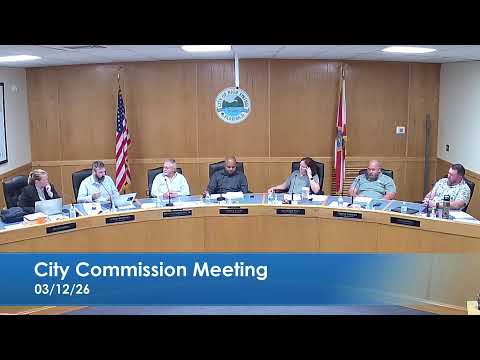
The High Springs City Commission voted unanimously on March 12 to adopt Ordinance 2026-01, establishing a process for reviewing and approving requests involving certified recovery residences (CRRs).
Under the new ordinance, requests for exemptions from the city's land development code related to CRRs will be decided by the City Commission rather than by administrative staff. The ordinance incorporates a 60-day timeline: the commission must issue a written final decision within 60 days of receiving a completed application. Staff clarified that the 60-day clock starts only after the city manager determines an application is complete.
City staff told commissioners the ordinance aligns the city with Florida Senate Bill 954 (2025) and with federal fair housing requirements. Commissioners questioned how CRRs should be classified in the interim while the city rewrites its Land Development Code (LDC). Several commissioners and staff described a possible temporary amendment (a ‘‘band‑aid’’) that would list CRRs as a subset of ‘‘group homes’’ in the permitted‑uses table until the full LDC rewrite is complete.
Commissioners discussed zoning implications (which residential zoning districts would require special exception review), whether to limit CRR placement (for example by minimum distance between facilities), and the timing of a full LDC rewrite and public workshops. Staff said the rewrite process begins with outreach and workshops in May and could take roughly a year to complete.
The ordinance passed on a roll‑call vote with Mayor Miller, Vice Mayor Bledsworth, Commissioner Grunder, Commissioner How, and Commissioner Whites voting yes. The ordinance text, as presented, directs staff to accept applications under the new process and return to the commission where applicants claim a reasonable accommodation or exemption from the LDC.