Get Full Government Meeting Transcripts, Videos, & Alerts Forever!
Get email alerts on the Bonita Estero Rail Trail topic
No spam. Unsubscribe anytime.
Bonita Springs council authorizes $35 million bond referendum for Bonita Estero Rail Trail
Summary
Bonita Springs City Council voted to place a bond referendum on the Aug. 18 ballot authorizing up to $35 million in general-obligation bonds, with a 30-year maximum term, to acquire the inactive Bonita railroad corridor and begin planning and phased construction of the Bonita Estero Rail Trail.
Bonita Springs City Council voted to place a ballot question on the Aug. 18, 2026, ballot authorizing the city to issue up to $35 million in general‑obligation bonds, maturing within 30 years, to acquire the inactive railroad corridor and fund planning and eventual construction of the Bonita Estero Rail Trail.
Supporters at the meeting said the trail would stitch together neighborhoods, improve downtown activation and address safety concerns. Kyle Moran, a longtime resident, told the council the measure is affordable for homeowners: “this will cost less than $50 per year for the average home. That’s $4 a month.” Deb Orton, president of Friends of BERT, urged the council to give the volunteer group a clear amount to campaign on and said she would lead get‑out‑the‑vote and grant‑seeking efforts, including applications to FDOT’s Suntrails program.
Council deliberations focused on how large an authorization to seek: proponents argued $30 million might only cover acquisition and leave little for closing, remediation and early construction, while others preferred a higher cap to allow phased construction and planning. Finance and bond counsel emphasized that the ballot language asks only for a maximum borrowing authorization and that the city can issue debt in tranches — first to close the purchase and fund due diligence, and later to borrow for construction when plans and bids are available.
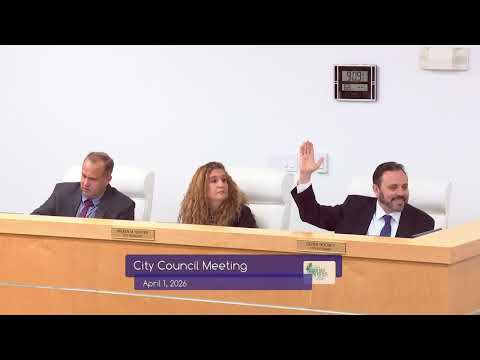
A council member summarized the tradeoffs: if the city borrows only for acquisition, it risks buying the corridor without resources to build segments; a slightly larger authorization with existing CIP funds could fund acquisition, due diligence and initial construction phases. After discussion councilmembers made and seconded a motion to authorize placing a $35 million, 30‑year ballot question; roll call votes recorded a council majority in favor and the sample ballot language was approved for the August 18 election.
The vote does not obligate the city to borrow the full amount nor to begin construction immediately. Staff and bond counsel said the city will prepare a due diligence memorandum before any tranche of debt is issued and will return to council with final referendum language, refined estimates and proposed phasing at second reading and in subsequent budget actions.
What happens next: staff will finalize ballot language and due‑diligence materials for council review. If voters approve the measure, the city plans to acquire the corridor and seek grants and partnerships to fund design and construction. The council noted construction of a usable segment could be several years out because of railroad tie removal, regulatory steps and construction scheduling.