Get Full Government Meeting Transcripts, Videos, & Alerts Forever!
Get email alerts on the Climate Adaptation topic
No spam. Unsubscribe anytime.
University researcher outlines regional climate risks; Cook County community session set for April 21
Summary
Seth Spencer of the University of Minnesota described NOAA‑funded regional planning and climate projections showing warmer winters, more intense storms and local flood and wildfire risks; he invited Cook County residents to a free April 21 listening session in Studio 21 to inform a resilience plan.
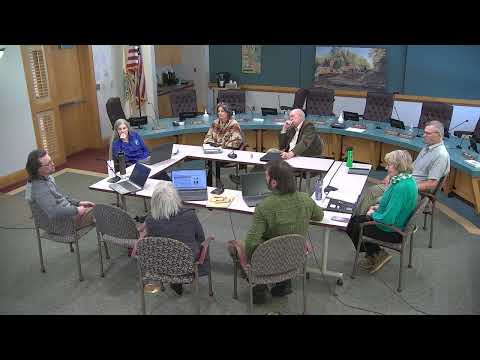
Seth Spencer, an extension educator with the University of Minnesota Climate Adaptation Partnership, told the Cook County committee of the whole on March 17 that a regional planning effort funded by the National Oceanic and Atmospheric Administration is mapping climate risks and adaptation options for northeast Minnesota.
Spencer said the project — the Northland Climate Resilience Collaborative — is in year two of a four‑year NOAA planning grant hosted by St. Louis County. "It's a $1.8 million planning grant around climate resilience," he said, and the work includes partners such as Cook County, the 1854 Treaty Authority, St. Louis and Carlton counties, soil and water conservation districts, the Arrowhead Regional Development Commission and the University of Minnesota.
The presentation summarized observed changes and near‑term projections that Spencer said matter for county planning. He said Minnesota's average annual temperature has risen about 3°F over the last 130 years and that winter lows in northern Minnesota have risen by roughly 7½°F, with Cook County warming by about 6½°F — changes he tied to altered snowpack, freeze‑thaw cycles and infrastructure stress. "When you look at that historical average ... that's an increase of 11 and a half degrees," he said while explaining longer temperature baselines and seasonal shifts.
Spencer also described recent and projected impacts: larger but less sustained snowstorms; more intense summer flood events (he cited significant June 2024 rainfall and local washouts); emerging public‑health concerns including new tick species and changing air‑quality risks; and ecological stresses such as spruce budworm outbreaks and changing fish populations.
Looking ahead, Spencer said the region could see materially different conditions within decades. By about 2040 he said Cook County could experience roughly 20 fewer days with a sustained 6‑inch snowpack; by the end of the century he said a typical two‑day extreme rainfall event could deliver about an inch more rain and the area could experience up to 13 additional days above 90°F — outcomes he said would affect roads, water infrastructure, recreation and public health.
Spencer stressed regional coordination and tribal partnership in planning, and he said the collaborative is emphasizing community engagement. He invited Cook County residents to a free community listening session on Tuesday, April 21 at Studio 21, telling the committee the event will include a presentation of projections and an opportunity for residents to identify local priorities to incorporate into the plan.
The committee followed with questions and local observations: members described recent washouts, alternative route planning around damaged bridges, and noted that Cook County has declared five local emergencies in the past eight years (one for COVID and four weather‑related events), which officials said underscores changing risks.
Spencer said the NOAA grant work will continue through 2028 and that the collaborative's five working groups — including critical infrastructure, community health and well‑being and energy sovereignty — are designed to produce regionally coordinated strategies rather than isolated county plans.