Get Full Government Meeting Transcripts, Videos, & Alerts Forever!
Get email alerts on the Wastewater Infrastructure topic
No spam. Unsubscribe anytime.
Scituate seeks EPA technical help to study sewer options for Hope Village, citing Hope Pond water concerns
Summary
The council authorized the town engineer to apply for EPA technical assistance to fund a no‑cost feasibility study of wastewater options for Hope Village and Hope Pond. Supporters said the study would examine alternatives including on‑site treatment and a potential sewer district; residents raised questions about failing cesspools and funding for homeowner connections.
The Scituate Town Council voted to pursue a no‑cost EPA technical assistance program to carry out a wastewater feasibility study for Hope Village and the Hope Pond watershed.
Cindy San Francisco, representing the Conservation Commission and Land Trust, asked the council to move forward with an application to the EPA program called "Closing America's Wastewater Access Gap" so the town can evaluate options at no immediate cost. "This first step will produce alternatives, cost estimates and an approach to public outreach," San Francisco said.
Rob Bower, chair of the Land Trust, told the council the assistance could save the town tens of thousands of dollars compared with prior consultant bids and bring federal technical expertise to bear. "We were saving that bid of almost $70,000," Bower said, urging council support for the application and for public meetings with the EPA technical team.
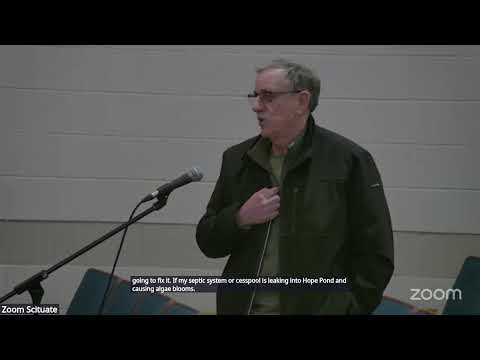
Council discussion and public comments focused on the range of possible solutions — from individual septic upgrades and low‑interest loan programs to creation of a Hope sewer district and use of on‑site wastewater treatment systems approved for the nearby Hope Mill project. Several residents asked whether failing cesspools are contributing to algae blooms in Hope Pond and whether state rules or town enforcement have ensured systems were replaced at home sales.
A town official and council members responded that the feasibility study will analyze multiple alternatives, their costs, and funding paths (including state and federal grants and low‑interest loan programs). They said some grant opportunities and loan programs exist but that infrastructure costs passed to homeowners can be prohibitive, and urged a measured approach that looks at neighborhood‑scale solutions.
The council directed the town engineer to pursue the EPA technical assistance application and to coordinate the study with the town consultant and relevant stakeholders. The consultant would later present findings and options to the council and the public.
What happens next: If the EPA assistance is awarded, the study will evaluate alternatives, cost estimates and potential funding sources; staff will bring results back to the council for consideration of next steps.