Get Full Government Meeting Transcripts, Videos, & Alerts Forever!
Get email alerts on the Municipal Finance topic
No spam. Unsubscribe anytime.
Mesa City Treasurer outlines plan to refinance $225 million in utility debt, seek $61 million in GO bonds and $341 million in utility obligations
Summary
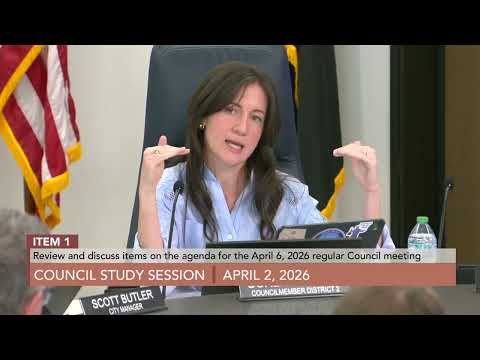
City Treasurer Mark Huit told the Mesa City Council study session the 2026 financing plan would refinance roughly $225 million of utility bonds (saving an estimated $13.6 million), issue $61 million in general obligation bonds for parks, public safety and transportation, and seek $341 million in utility obligations split between growth and non-growth projects.
City Treasurer Mark Huit presented the city's 2026 financing plan at a Mesa City Council study session, saying the package would refinance about $225 million of earlier utility bonds and propose two new issuances: roughly $61 million in general obligation (GO) bonds and about $341 million in utility revenue obligations.
Huit said the refinancing target covers bonds issued between 2013 and 2016 and would yield an estimated $13.6 million in total savings, representing a net-present-value savings of roughly 4.2%—above the city's 3% threshold for refinancing. "We are looking to refinance approximately 225 million of utility bonds that were previously issued between 2013 and 2016," Huit said, adding the move would not extend the final maturity of the debt.
The proposed GO issuance would target parks, public safety and transportation projects with target proceeds of $61 million drawn from prior voter authorizations (2020, 2022 and 2024), Huit said. City staff emphasized the city's practice of timing bond sales to when projects are ready to proceed, and keeping maturities and repayment schedules aligned with project useful lives.
The third component would be $341 million in utility system obligations, split roughly $179 million for non-capacity projects and $162 million for capacity-related, growth projects. Staff noted the recently adopted capacity fee would cover a substantial share of growth-related debt service; Huit said about 47.5% of the pictured bonds would be paid from capacity-fee revenue and therefore not borne by all utility ratepayers.
Deputy City Manager/CFO Mike Kennington and other staff described the city's bond philosophy: smaller, more frequent issuances targeted to categories (public safety one year, transportation another) rather than infrequent, decade-long omnibus packages. Staff also showed projections of debt-service smoothing across the five-year forecast and stressed that refinancing would not lengthen final maturity dates on the underlying obligations.
Council members asked about taxpayer impact, the constitutional debt limit and reserve policy; staff said the city remains well under its statutory capacity and aims to maintain stable secondary property-tax impacts. Huit said the financing plan would be presented to Council for approval at the April 6 meeting and that actual bond sales would be subject to market conditions and IRS/timing windows.
Next steps: the Council will consider the financing items at its Monday meeting; sales and pricing will be set afterward subject to market conditions.