Get Full Government Meeting Transcripts, Videos, & Alerts Forever!
Get email alerts on the Aggressive Dog Policy topic
No spam. Unsubscribe anytime.
Seminole County board strengthens aggressive-dog rules, adds lifetime —propensity to be dangerous' designation
Summary
The board approved multiple changes to the aggressive-dog ordinance including a 10-day confinement window, new signage and registration rules, a lifetime "propensity to be dangerous" designation, an insurance requirement in draft, and a requirement that such dogs be supervised in enclosed yards.
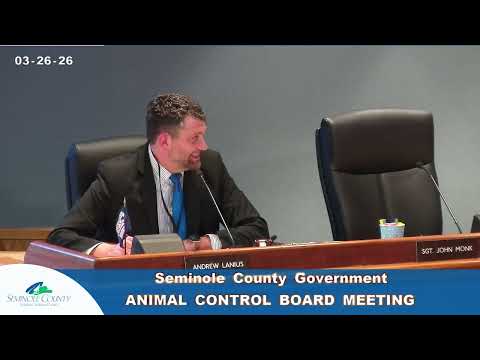
Seminole County's Animal Services Board voted to strengthen the county's aggressive-dog rules, adopting several draft changes staff proposed to close gaps between local code and state law.
Public commenter Tammy Blakey told the board her small dog was killed by a larger dog and urged the board to close what she described as a local loophole that allows a lethal dog to be labeled only "aggressive" rather than "dangerous," leaving future victims unprotected. "We essentially [give] dogs one free kill before we require the owners to be financially responsible," Blakey said, and asked that level-five or -six attacks automatically trigger secure-enclosure and insurance requirements.
In response, county staff proposed a set of revisions (packet materials underlined for members) that include extending mandatory confinement periods from five to ten days to align with state procedures, adding unprovoked injury to a human while on private property as a cause, posting signage for designated animals, and creating a new lifetime classification called "propensity to be dangerous" (applies when an aggressive dog re-offends but does not meet the statutory dangerous-dog standard). Staff's draft also included a liability-insurance requirement (packet listed a $50,000 figure in draft language).
Board members debated practical enforcement measures: whether enclosures must be roofed, whether owners with no yard could realistically comply, and whether supervision and muzzling rules should differ between private yards and public spaces. Members concluded that dogs designated with a —propensity to be dangerous— should remain registered for life and be constantly supervised within enclosed yards; dangerous dogs retain the existing stricter enclosure requirements.
The board voted to accept the draft changes and send the revised ordinance language back to staff and legal for final drafting and scheduling with the Board of County Commissioners. Staff said the board's packet changes will be returned at the next Animal Services Board meeting and then taken to commissioners for a public hearing.