Get Full Government Meeting Transcripts, Videos, & Alerts Forever!
Get email alerts on the Automated Speed Enforcement topic
No spam. Unsubscribe anytime.
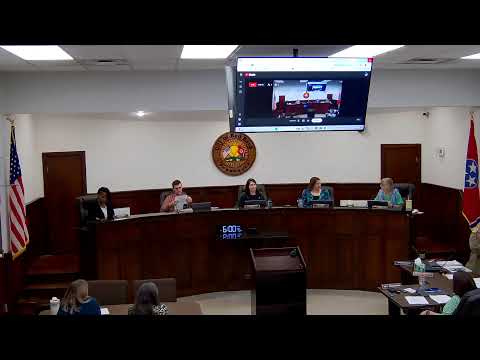
Red Bank considers automated speed-enforcement cameras near schools after traffic study
Summary
City staff and vendor Blue Line Solutions presented a plan to install automated speed-enforcement cameras in Red Bank school zones (Ashlin Terrace, Morrison Springs and Dayton Boulevard). Officials discussed crash and speed data, privacy and data-retention terms, warning periods and next steps; no vote was taken.
A staff presenter asked the commission to consider a vendor-run automated speed-enforcement program aimed at slowing vehicles in school zones along Ashlin Terrace, Morrison Springs and Dayton Boulevard.
The presenter said traffic studies for Ashlin Terrace show 18,000–20,000 vehicles per day with 8–10% traveling above 41 mph and roughly 40–45 crashes a year on that corridor, including nine injury crashes in a 12-month sample. Morrison Springs was described as carrying about 14,000 vehicles per day with substantial proportions traveling above posted speeds during school-zone hours. The city framed the proposal as part of a broader safe-streets strategy that also includes future engineering projects to change road geometry.
Ryan Moore, a representative of Blue Line Solutions, described how the system works and its operational safeguards. Moore said the units use laser measurements and lane-specific imaging to capture photo and video, vendor staff initially review footage, and the city police department performs an officer review before any citation is issued. Moore said the vendor generally seeks a two-year equipment-and-installation agreement and that the program has no upfront cost under a revenue-share model. "We do it like Ch said ... the TCA code is 558198 and it says there must be a sign," Moore said, describing state signage requirements and the vendor’s practice of providing radar-feedback signs and an education phase. He added that cameras typically trigger on vehicles traveling about 11 miles per hour over the posted limit.
Commissioners and staff pressed the vendor on data questions: whether the devices run continuously, what analytics the city can access, retention and purge windows, and who handles evidence review. The vendor said enforcement data collection would be limited to active school-zone hours for citation purposes, that radar-feedback signs can run continuously to display drivers’ speeds, and that vendor-held media are typically purged in roughly 30–60 days (a term negotiable in contract). The police chief said his department would verify that a zone was active and would review footage before issuance.
Privacy and enforcement limits were raised repeatedly. A commissioner noted the distinction between civil citations from ASE systems and criminal driving records; Moore confirmed the program issues civil notices and does not directly alter driving records or insurance status. A citizen speaker, Mr. Muller, used the public-comment period to ask specific questions about long-term cost structure, whether revenue-share terms change after two years, minimum revenue thresholds for program continuation, and how the city would proceed if only one of two proposed locations proved feasible.
Why it matters: commissioners said their primary objective is reducing serious injuries and fatalities, not revenue generation, and several members emphasized the need for a robust public-information campaign and a warning period before citations begin. No formal vote was taken; staff said the presentation was for information and the item would return later with ordinances and contract details if the commission decides to proceed.
Next steps: staff will follow up with more detailed contract terms (including data-retention and reporting requirements), draft ordinances to define school-zone limits, and a proposed public-education timeline before any decision.