Get Full Government Meeting Transcripts, Videos, & Alerts Forever!
Get email alerts on the Asce7 Flood Supplement topic
No spam. Unsubscribe anytime.
Council removes ASCE7 supplement 2 from adoption package, citing cost and mapping sync concerns
Summary
After staff posted two versions of an IBC proposal referencing ASCE7 supplements, the council voted to file an amended version that excludes supplement number 2 — which would have expanded flood‑hazard design areas from the 100‑ to 500‑year floodplain for many risk categories — citing large cost and coordination risks.
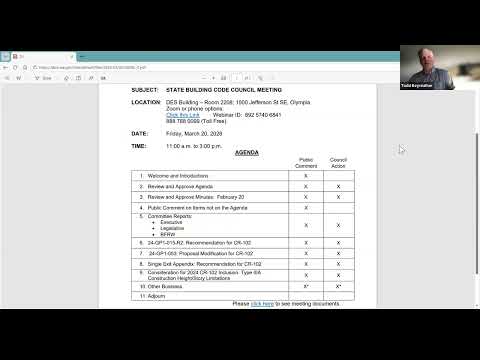
At its March 20 meeting the Building Code Council directed staff to file an amended IBC proposal (24GP1053R1) that removes Supplement Number 2 from the ASCE7 reference standard. Staff had posted two versions: the original approved by the TAG and a revised version removing Supplement 2 following concerns.
Council member Roger Heeringa said Supplement 2 would expand the mapped flood hazard area from the 100‑year to the 500‑year floodplain for risk categories that cover most buildings, which would "impact many other things" and increase costs and coordination burdens across codes. Hoyt Jeter and others said moving to the 500‑year mapping would add substantial costs and should be coordinated at the national level before statewide adoption.
Heeringa moved and the Council voted to replace 24GP1053 with revision 1 and direct staff to file R1 for CR102. The motion passed by voice vote.
Why it matters: Supplement 2 would broaden the areas subject to flood‑hazard design, with consequential effects on structural design, insurance, and cost. The council's decision delays adoption of that supplement in this code cycle while preserving the option to consider it in a later (2027) code cycle when supporting mapping and coordination could be in place.