Get Full Government Meeting Transcripts, Videos, & Alerts Forever!
Get email alerts on the Child Welfare topic
No spam. Unsubscribe anytime.
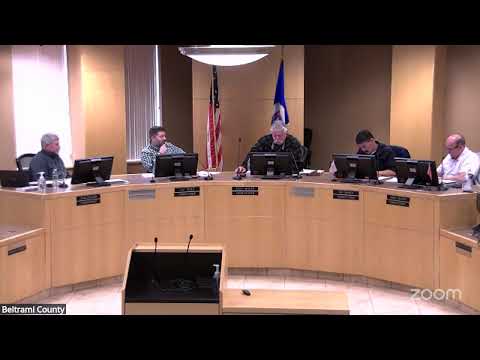
Beltrami County health officials propose parental fees for some out-of-home youth placements
Summary
County health department staff presented a draft parental fee policy to collect parental income information, pursue federal 4E reimbursements and assess sliding fees starting near 275% of the Federal Poverty Guideline; commissioners raised concerns about potential burdens on families and a lack of current income data to forecast revenue.
Ann Lindsath, director of Health and Human Services, and Jeff Lind, social services division director, presented a draft parental fee policy to the Beltrami County Board, saying the measure would allow staff to collect parental income data needed to determine eligibility for federal 4E foster-care reimbursements and, in some cases, charge families a sliding fee for court-ordered or voluntary out-of-home placements.
"Parental fee policies are supported by Minnesota statute and rule," Ann Lindsath said, and the department has drafted a policy aligned with other county practices to both seek reimbursements and authorize a departmental fee schedule when appropriate.
Jeff Lind outlined how the policy would work in practice and why the county is proposing it now. He said counties often cannot claim 4E federal reimbursements without parental income information and that a formal policy would both compel necessary documentation and allow a modest sliding fee for families above an income threshold. "This gives us an opportunity to leverage the financial piece to ensure that parents are working toward the ends that we all want them to be, which is children back home again," Lind said.
Staff recommended aligning charging thresholds with Minnesota Department of Human Services guidance, suggesting that charging begin at about 275 percent of the Federal Poverty Guidelines. Lind walked the board through example scenarios in the packet: for a four-person household the recommended rule would produce illustrative monthly parental fees in the low hundreds of dollars (the presentation used figures near $275–$325 per month), while also noting that many specialty placements cost hundreds of dollars per day and that the parental fee is expected to cover only a small portion of overall placement costs.
Commissioners asked questions about who would be charged, how the fee would be calculated, and when it would apply. Commissioner Sumar cautioned that a $275–$325 monthly assessment could be difficult for many families and said the board should be mindful of local cost-of-living pressures: "I just don't know if people have that type of money to afford this type of fee," Sumar said. Other commissioners asked how much additional federal reimbursement the county might capture; staff replied they cannot accurately forecast reimbursement gains without a policy in place because parents frequently decline to provide income information today.
The draft policy includes an objection and review process: families could request reconsideration by a placement-fee review committee that would include county and outside stakeholders (for example, school social workers and state probation staff). Staff emphasized statutory protections allowing fee waivers when necessary for the child's best interest and said the board could revisit and adjust the policy annually after a pilot period.
No formal board action was taken at the work session. Lindsath and Lind said the policy is intended to be implemented carefully, with an initial pilot and annual review so the county can adjust thresholds and administrative practices as experience and data permit.
The board directed staff to keep the item available for future discussion and to include contract and implementation clarifications when the policy returns for formal consideration.